
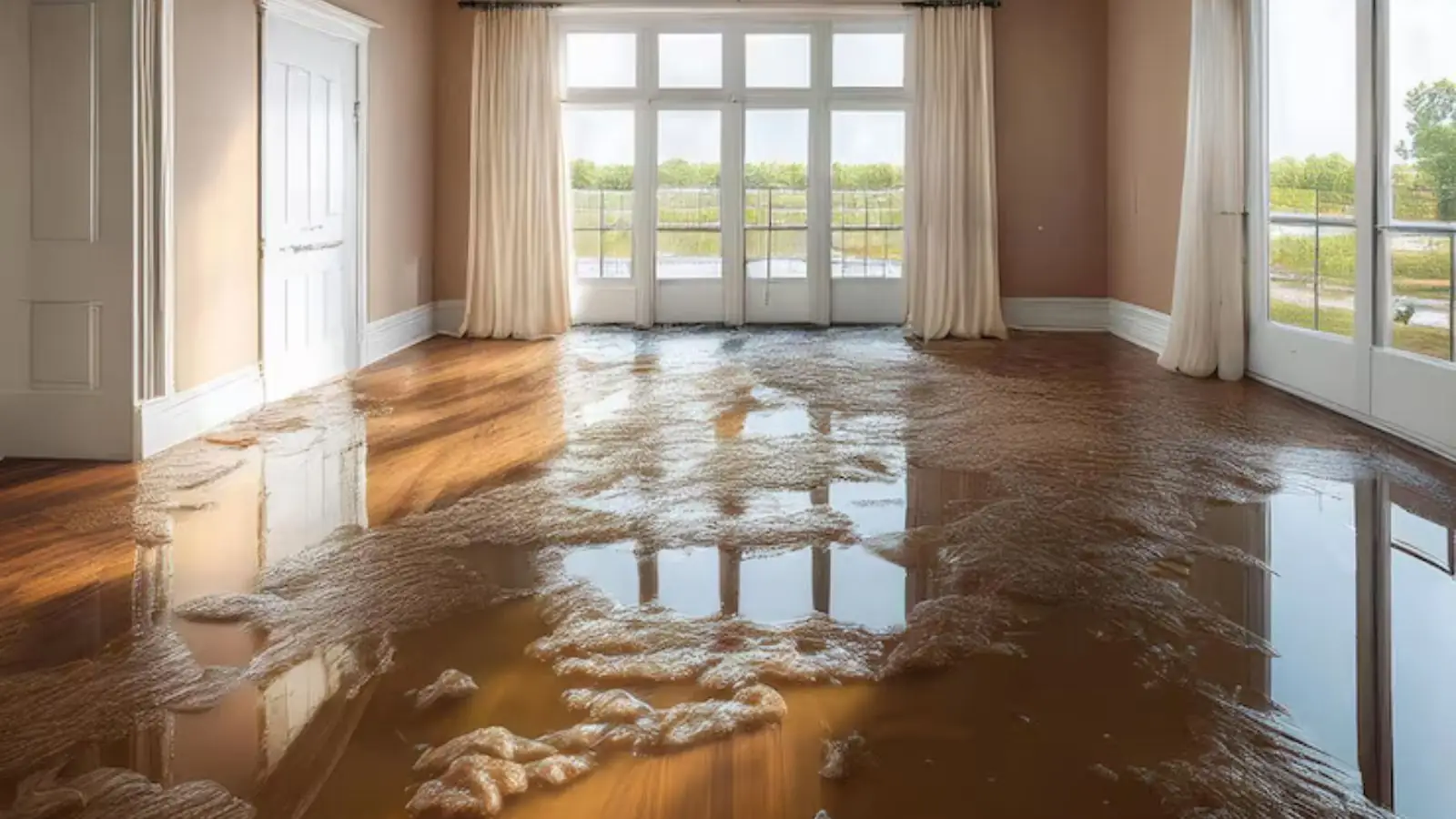
Water damage to wood floor shows up as cupping, crowning, buckling, gaps or dark stains, and each one points to a different amount of moisture and a different time frame. Wood takes on moisture from below, from the edges and from the air, which is why a small, unnoticed leak can wreck a floor before a puddle is ever seen.
What water does to a wood floor
Boards absorb water and swell. If the underside is wetter than the top, the edges rise and the board cups. If the top is wetter, the center rises and the board crowns. Heavy water can push boards tight against each other until they lift off the subfloor, which is buckling.
Dark stains point to long-term moisture or a finish that has failed. Black spots or a persistent musty smell suggest moisture has been trapped for some time and the subfloor needs a look.
| Symptom | Likely cause | Typical response |
|---|---|---|
| Cupping, edges raised | Moisture from below or the edges | Find the source, dry, wait, then refinish. |
| Crowning, center raised | Surface moisture or sanding before dry | Dry fully before any refinishing. |
| Buckling, boards lifting | A large amount of water | Fast drying, likely board replacement. |
| Gaps between boards | The floor has dried below its normal moisture | Wait, then reassess. |
| Dark stains or black spots | Long-term moisture | Inspect the subfloor, consider replacement. |
The timeline decides what is saved
EPA guidance says wet materials should be dried within 24 to 48 hours. For wood floors, that makes the first call matter more than any home fix. Drying mats pull moisture out of the board, and controlled airflow handles the rest, but only if the floor has not been left wet for days.
The surprise is how long boards can look normal. A washing machine valve that leaks slowly, a condensation line from an air conditioner or a plumbing leak under a slab can keep a floor wet for weeks. By the time the floor looks wrong, the underside has been saturated for a long time.
Where the water comes from
The usual suspects are a dishwasher or refrigerator supply line, a leaking sink trap, a washing machine hose, a water heater and a toilet seal. Hardwood near a sliding door or a poorly sealed window can also take water from rain. Any of these can be slow, which is why the damage grows before anyone notices.
If the floor is over a concrete slab, moisture can also move up from below. A moisture reading at the surface and at the subfloor helps separate a plumbing leak from a slab moisture problem, and the fix is different for each.
Wood floor wet or warped?
Call and we explain what to check and when to dry.
What to do when you find a wet wood floor
- Stop the source and mop up surface water.
- Remove rugs, furniture and anything that traps moisture against the floor.
- Open windows or run fans for airflow if the room is dry enough.
- Do not sand, refinish or seal the floor while it is wet.
- Call for a moisture reading before deciding what to replace.
The water damage repair page covers drying and rebuilding floors, and water mitigation covers the drying equipment used to protect boards.
Solid, engineered and laminate floors react differently
Solid hardwood swells and can often be dried and refinished if it was caught early. Engineered wood has a thin wear layer over plywood, and the layers can separate once they have been wet, so the repair window is shorter. Laminate is a fiberboard core that swells at the seams and rarely goes back to its original shape.
Knowing which floor you have changes the plan. A crew will check the edge of a board, a transition strip or a vent opening to see the construction, and the answer shapes whether the plan is drying, partial replacement or full replacement.
Why drying must be slow and measured
Drying a floor too fast can crack boards and split the finish, so the goal is steady removal of moisture and not heat. Drying mats, air movers and dehumidifiers work together, and the crew rechecks moisture readings against a dry reference board from the same floor. The floor is ready for repair when the readings match, not when it looks right.
Sanding too soon is a common error. A floor sanded before it is dry can shrink after it is finished, which opens gaps and splits the new coating. Waiting costs little. Redoing a finish costs a great deal.
What a floor repair involves
Once the floor reads dry, boards that cupped may flatten. If they do not, the choice is between sanding the surface and replacing individual boards. A floor with deep staining or rot at the subfloor needs more than refinishing.
Questions to ask before anyone sands the floor
- What are the moisture readings, and what do they need to be?
- How long has the floor been dry at that reading?
- Will you sand the whole floor or blend the repair?
- How will new boards be matched to the old ones?
- What happens if the floor moves again after finishing?
A contractor who answers those with numbers, dates and a clear plan is working from the readings. One who answers with confidence and no numbers is guessing, and a guessed floor often needs a second finish.
Matching is where the cost sits. Species, width, grain and stain color all need to line up with what you have, and an older floor has aged a different color from new boards. The Santa Barbara page and the service area page show where we can help with the work.
Goleta local note: matching a floor in a high-value home
The Census Bureau lists the median value of an owner-occupied Goleta home at $1,062,100 for 2020 to 2024. When floors are a selling point, matching species, width and stain matters, and so does saving a floor that can be dried.
Take photos of your floor and keep any purchase or installation records. They help a crew match new boards and help an insurer understand what was there.
Wood floor water damage questions
Why did my wood floor cup in a Goleta home with no visible leak?
Slow leaks, condensation lines and moisture from a slab or crawl space can keep the underside of boards wet for a long time. Cupping is the visible result of that imbalance.
Will cupped floors flatten on their own?
Sometimes, once the moisture source is fixed and the floor has dried slowly. Refinishing starts only after readings are dry.
Is cupping the same as buckling?
No. Cupping is raised edges. Buckling is boards lifting off the subfloor, and it usually means a larger amount of water.
Can a floor be saved after a plumbing leak?
Often, if caught early and dried with the right equipment. The crew decides after readings.
Questions about your own situation?
Call the 24/7 line and describe what you see. Call and we explain what to check and when to dry.