
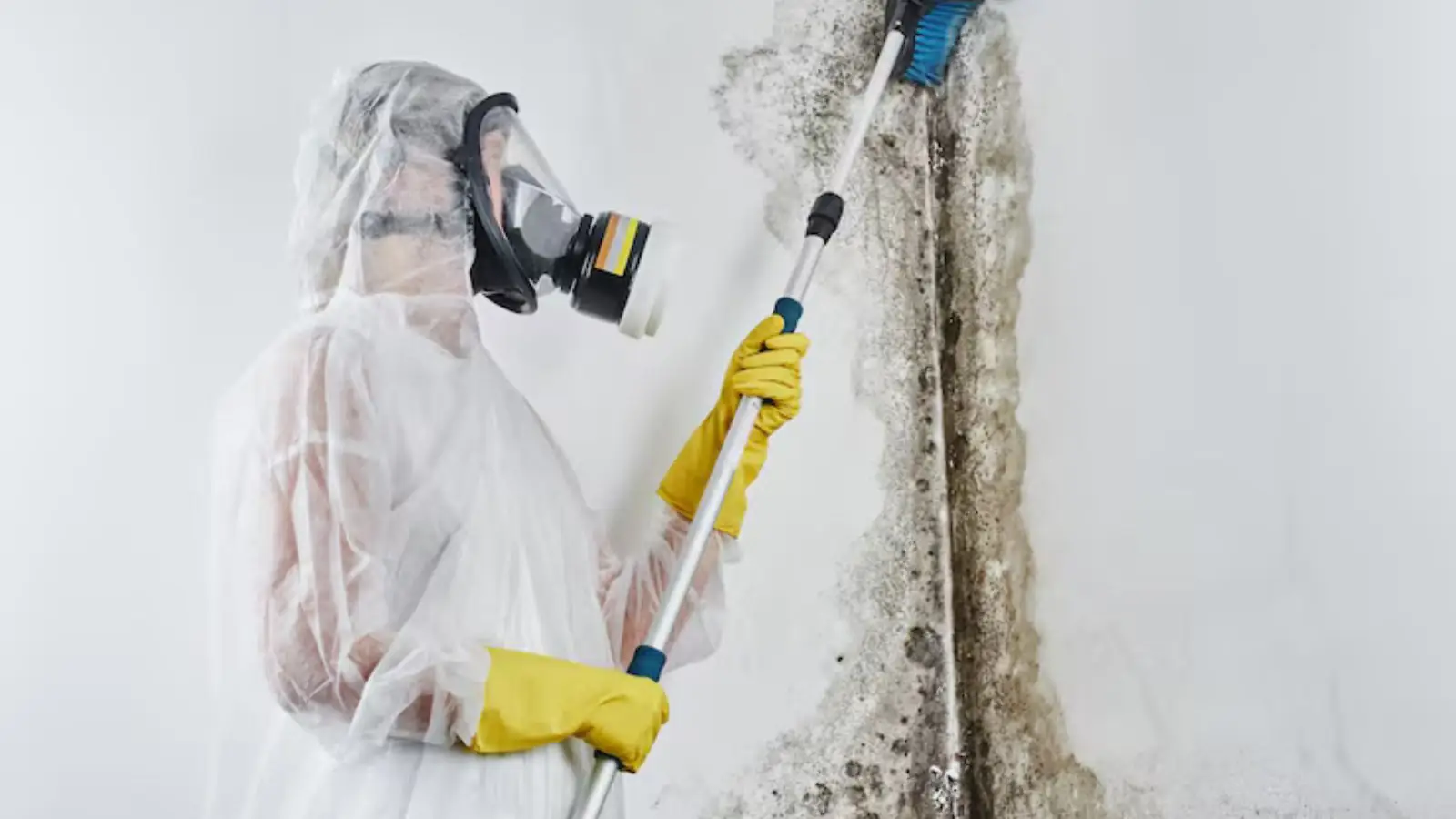
Mold remediation is the process of finding the moisture that is feeding mold, containing the affected area, removing contaminated materials and cleaning what remains. If you need mold remediation in Goleta, CA, call our 24/7 line. Mold always needs moisture, so the first question is where the water came from, and fixing that source comes before any removal.
Our approach follows the ANSI/IICRC S520 standard for mold remediation as a published industry standard, and you should ask any company whether its crews work to it. We explain the scope and how pricing is set before work starts, and an assessment can be arranged by phone.
I see dark spots or smell something musty
Most people do not search for mold remediation. They search for black spots in the bathroom corner, a stain on the closet ceiling, a smell under the stairs or fuzzy growth behind a piece of furniture that was pushed against a wall. Those are the common signs, and almost all of them trace back to a leak, a condensation problem or a wet spot that never dried.
If you see any of that, take photos, keep the area dry and call us. We will ask where the moisture came from and how large the area is, and explain whether a quick surface cleanup is realistic or whether the area needs containment and removal.
Mold testing and inspection
An inspection starts with a visual survey and a moisture meter. The point is to find the wet material and decide how far the growth extends, including behind walls and above ceilings where it cannot be seen. A thermal camera can show cool, damp areas that the eye misses.
Testing is sampling, usually air or surface samples sent to a laboratory. It tells you what is present, not what is safe, and results depend on how and where samples were taken. Independent clearance testing after remediation is done by a third party who is separate from the crew doing the work, and it is a common request.
Whether testing is useful for you depends on the situation. It is often helpful for a sale or a dispute, and less useful for obvious growth on a wet wall that needs to be removed anyway. We will tell you which applies.
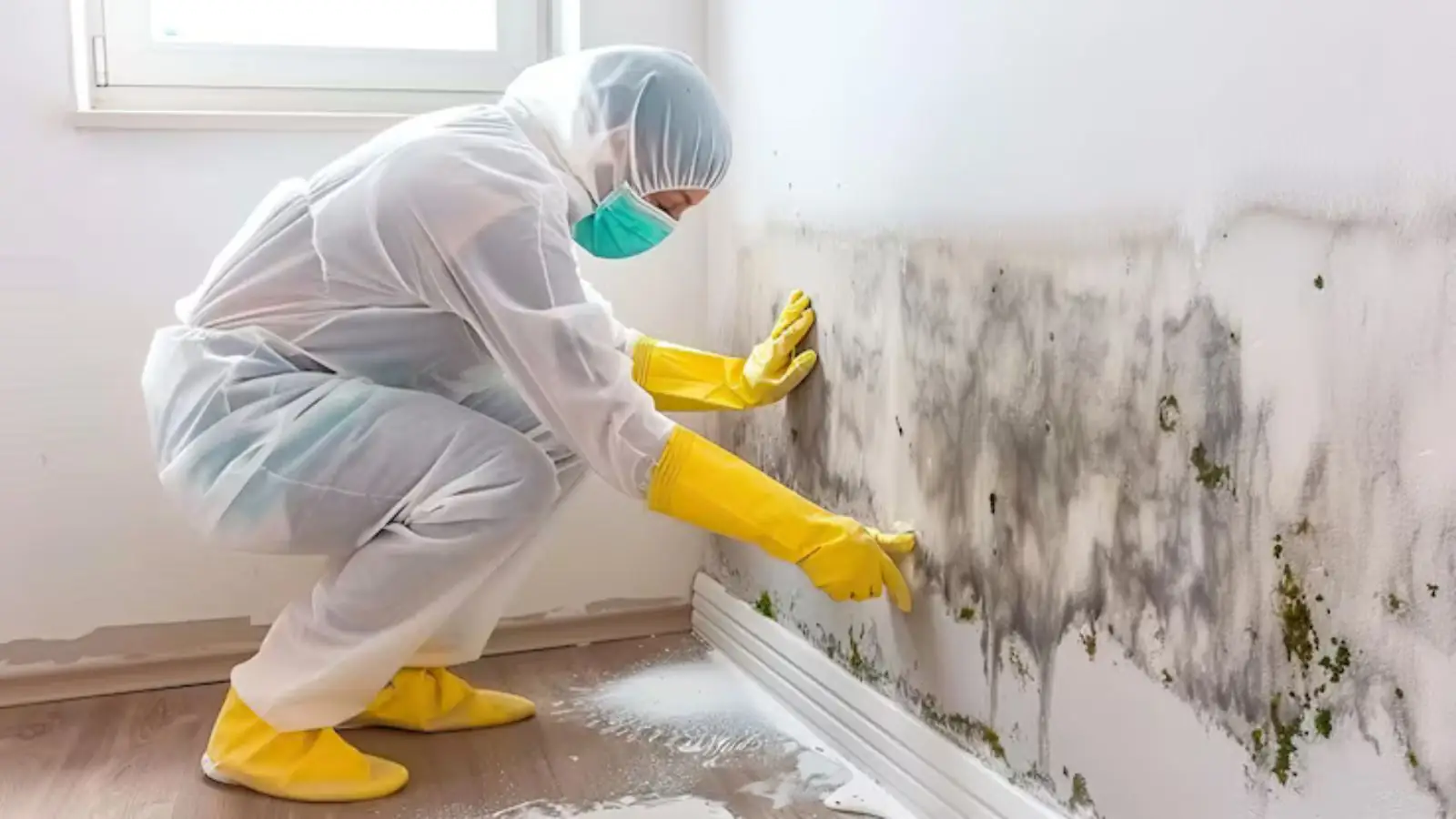
Mold removal and black mold cleanup
Color does not identify a mold. Dark growth and lighter growth call for the same work, so color does not change the plan: remove the moisture, contain the area and take out what is affected. Questions about symptoms or sensitivity belong with a physician.
EPA guidance suggests that people can handle a moldy area smaller than about 10 square feet themselves, and that a larger area, extensive water damage or contaminated water is when to hire a professional. The EPA also says that porous materials like ceiling tiles and carpet that become moldy should be thrown away.
- Fix the water or moisture source first.
- Contain the area with plastic sheeting and negative air so spores are not spread.
- Remove affected porous materials, such as drywall and insulation.
- Clean framing and hard surfaces with HEPA vacuuming and damp wiping.
- Dry the area and confirm dry readings.
- Rebuild, and arrange clearance testing if you want it.
Mold after water damage
Mold after water damage is the case where drying was late or incomplete. EPA guidance says to dry water-damaged areas within 24 to 48 hours, and growth is more likely when materials stay wet longer. A leak behind a wall, in a closet or under flooring can stay wet for weeks without being noticed.
If you had a leak and now see growth, call water mitigation first if anything is still wet, because drying and remediation are coordinated. The water damage repair page explains rebuilding after the affected materials come out.
| Situation | Usual approach | Notes |
|---|---|---|
| Small surface growth on a hard surface | Fix the moisture, clean and dry | EPA suggests homeowners can handle about 10 square feet or less. |
| Growth on drywall or ceiling after a leak | Contain, remove drywall, clean framing, rebuild | Porous material that is moldy is usually discarded. |
| Growth in a crawl space or attic | Moisture source fix, containment, removal, drying | Access and ventilation often decide scope. |
| Growth with sewage or floodwater | Treat as contaminated water first | See flood damage restoration. |
| Pre-sale or lender request | Inspection, remediation, independent clearance testing | Ask what the transaction requires. |
Describe it by phone
Call the 24/7 line, tell us what you see and we explain the first step.
What affects the cost of mold remediation
- Square footage affected and how many rooms are involved.
- Whether the growth is on porous materials that must be removed.
- Access, such as a crawl space, attic or inside a wall cavity.
- Containment and air filtration needed for the job.
- Testing, clearance and rebuild scope.
We explain the scope and how pricing is set before work starts. Insurance treatment of mold varies with the policy and the cause, so check your policy or ask your insurer. Want your real number? Call and describe what you see.
Mold in the house?
Call the 24/7 line. We explain the scope and how pricing works before work starts.
Safety checklist before you touch it
- Turn off power to any wet area before you work near outlets or fixtures.
- Wear gloves, goggles and a mask rated for fine particles.
- Do not sweep, brush dry or blow a fan across a large patch.
- Never mix cleaning products.
- Stop and call a crew if the area is large, inside a wall or follows flood or sewage water.
- Questions about symptoms or sensitivity belong with a physician.
Local note: mold, sales and permits in Goleta
When a Goleta home is being sold or refinanced, a buyer or lender may ask for documentation that mold was addressed. The Census Bureau lists a median owner-occupied home value of $1,062,100 for 2020 to 2024, and with that much at stake, ask your agent what the transaction requires before work starts.
Ask any company whether your state licenses mold work and whether the company holds the license. For rebuild permits after remediation, contact the City of Goleta Building and Safety Division at (805) 961-7552.
Mold remediation questions
Do you need to find the leak before removing mold?
Yes. Mold needs moisture, so removing growth without fixing the water source usually means it returns. Find and repair the leak or condensation problem, and then remediate.
Is testing required before remediation?
Not always. Visible growth on a wet material is usually removed without testing. Testing is more useful when you cannot find the source, when a sale or dispute is involved, or when you want independent clearance afterwards.
What is independent clearance testing?
It is testing by a third party who is not the crew doing the work, done after remediation to document the result. It is a common request for a sale or a lender, and no one can promise a particular result.
Can I just kill mold with bleach?
EPA guidance does not recommend bleach as routine practice. Hard surfaces are scrubbed with detergent and water and dried completely, and porous materials that are moldy are discarded.
Do you handle emergencies for mold?
Mold itself is rarely an emergency, but the water behind it can be. The 24/7 line is open every hour, and same-day response is offered when available.