
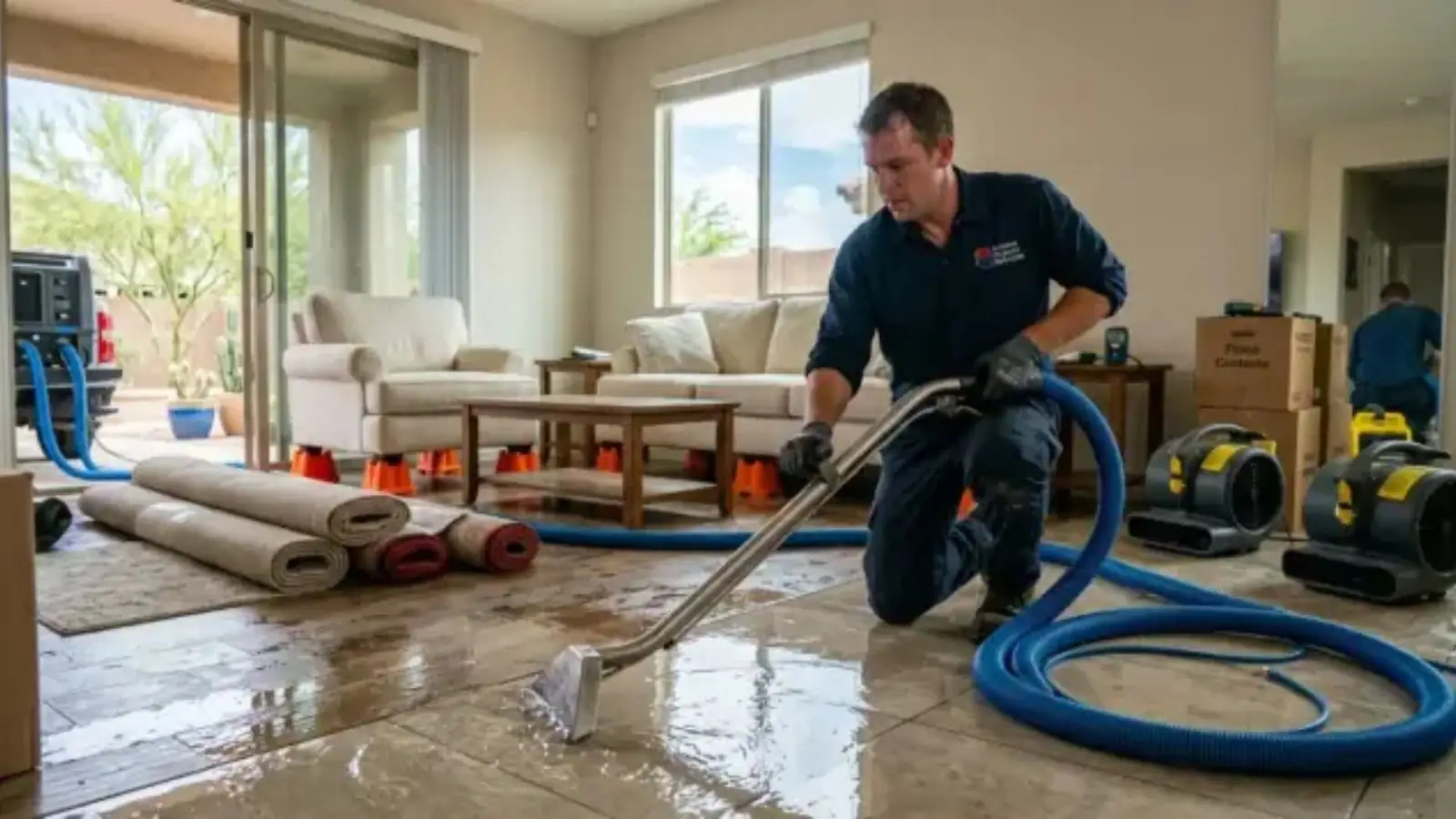
Emergency water removal is the fast extraction of standing water from floors, carpet and low areas with pumps and extraction units, followed by drying so the water does not soak into framing and drywall. If you need emergency water removal in Goleta, CA, the first hours decide how much has to be torn out. Our 24/7 line is open now, so shut off the source, keep people and pets out of the water and lift valuables while you call.
If the water is near outlets or a panel, turn off power only when you can reach the breaker on a dry floor. Otherwise stay out and call the utility or 911 first. Then call us, describe where the water started and which rooms are wet, and we will plan the first visit around that, with same-day response when available.
When standing water is an emergency
Standing water is an emergency when it covers more than a small patch, when it is still flowing, or when it has been sitting for more than a few hours. It wicks upward into drywall and baseboards, saturates carpet pad and slips under flooring where nobody can see it. Every extra hour means more of the house has to be opened up later.
At 3 a.m. the useful question is not what the repair will look like. It is how to stop the water and get it out of the building. That is what the after-hours line is for, and nobody will ask you to wait until Monday.
Extraction is the first stage in ANSI/IICRC S500, the published standard for water damage restoration. The standard sorts water into categories by contamination, and that category decides which wet materials can stay and which are removed.
Signs the water is deeper than it looks
Surface water is only part of the picture. These signs tell you water has already traveled into the structure:
- Baseboards that look dry but feel cool or soft at the bottom edge.
- Carpet that squishes underfoot several feet away from the visible wet spot.
- Paint or wallpaper that bubbles, stains or peels near the floor.
- Hardwood or laminate that lifts at the seams or sounds hollow.
- A damp, close smell in a room that was fine the day before.
- Water stains on the ceiling of the room below the leak.
How emergency water removal works
The crew starts by finding the source and confirming it is shut off, then walks the affected rooms with a moisture meter and a thermal camera. Those two tools show where water has traveled behind walls and under floors, so extraction does not stop at what the eye can see.
Extraction itself uses submersible pumps for deep water, truck-mounted or portable extraction units for carpet and hard floors, and wands that pull water out of padding and tile grout. Which one is used depends on how much water there is and what it is sitting on.
| Situation | Typical method | What decides the next step |
|---|---|---|
| Shallow water on tile or sealed concrete | Portable extraction wand and squeegee | Whether water has crept under baseboards or into cabinet bases. |
| Soaked carpet and pad | Weighted extraction, then pad lifted or removed | Water category and how long the pad has been wet. |
| Deep standing water in a room or garage | Submersible pump first, extraction units second | Where the water can safely be discharged. |
| Water inside a wall or ceiling cavity | Controlled opening, extraction, cavity drying | Insulation type and what the moisture meter shows. |
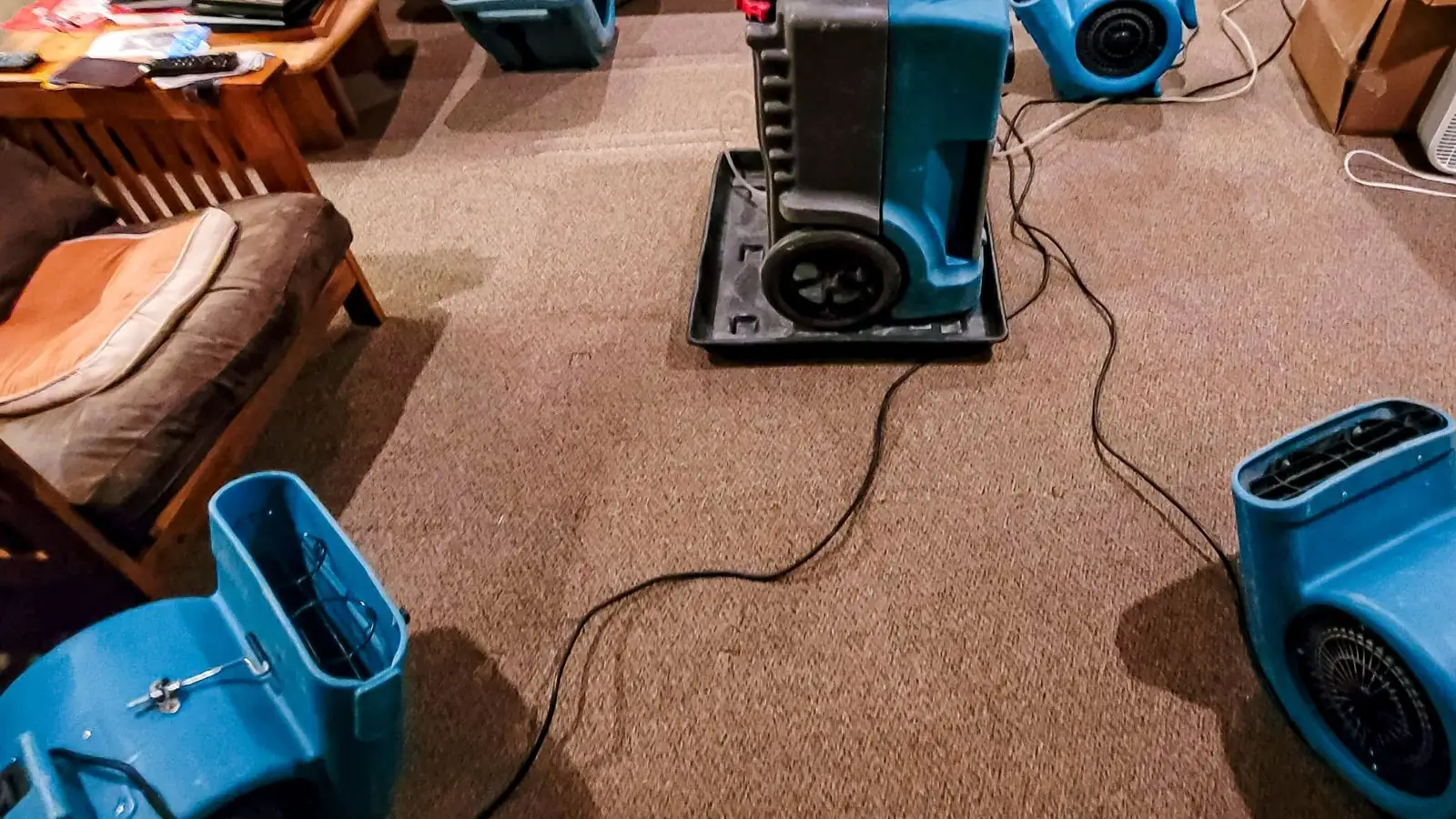
Extraction removes the bulk of the water but not the moisture held in wood, drywall and concrete. That is why most jobs move straight into water mitigation, where air movers and dehumidifiers pull out the rest while moisture meters track progress.
Burst pipe water damage: the first hour
A burst or failed supply line is the most common reason people call an emergency line. Pressurized water keeps flowing until the valve is closed, so the first minutes are about stopping it. Work through these steps in order:
- Close the main shutoff valve for the house, or the fixture valve if the leak is at a sink, toilet or appliance.
- Open a faucet at the lowest point of the house to drain what is left in the line.
- Make the area electrically safe, as described in the safety box below.
- Photograph the source, the water line on walls and anything damaged.
- Call the 24/7 line and say which rooms are wet and whether the water came from above.
If you cannot see a leak but the water bill or the sound of running water says there is one, check the water meter. A dial that keeps moving while every fixture is off points to a hidden leak in a wall, slab or yard line, and that is worth a call even before anything looks wet.
Safety first: electricity, gas and contaminated water
Never wade through water that reaches outlets, power strips or an electrical panel. Cut power only if you can reach the breaker while standing on dry floor. If you smell gas or see sparks, leave the building and call 911 or the utility before you call us.
Water from a toilet, a sewer line or a washing machine drain is contaminated. Keep children and pets out, wash hands after contact and read the flood damage restoration page for how sewage losses are handled.
Describe it by phone
Call the 24/7 line, tell us what you see and we explain the first step.
What affects the cost of emergency water removal
No honest company can quote a number for a house it has not seen, and we do not try. We explain the scope and how pricing is set before work starts. These are the factors that move the price:
- Water category, since Category 2 and 3 water adds removal and sanitizing steps.
- Affected square footage and how many rooms the water reached.
- Materials involved, such as hardwood, carpet, drywall or insulation.
- Days of drying and the amount of equipment the structure needs.
- Rebuild scope once drying is finished, priced separately.
Sudden and accidental water damage is often covered by a homeowners policy, gradual leaks and neglect often are not, and flood damage usually needs separate flood coverage. Check your policy or ask your insurer. Want your real number? Call the 24/7 line and describe the loss.
Water still on the floor?
The emergency line is open now. Tell us what you see and we will explain the scope and pricing before work starts.
Local note: water emergencies in Goleta
The Goleta Water District describes the Goleta Valley as a semi-arid climate with alternating periods of drought and heavy rainfall. For a homeowner that means a house can sit dry for months and then take water in a single storm. Walk the property before the wet season and check roof edges, gutters and door thresholds, because the first heavy rain finds the weak spot.
If a public water main or the line between the meter and your house is the cause, tell your water utility as well as us. The supplier can shut water off at the meter, which stops the flow faster than anything you can do inside.
Emergency water removal questions
Do you handle emergency water removal at night or on weekends in Goleta?
Yes. The emergency line is open 24 hours a day, every day, and same-day response is offered when available. Call after you have shut off the water and made the area safe, and tell us where the water came from and how far it has spread.
Can I use a household wet vacuum to remove the water myself?
A wet vacuum helps with a small spill on a hard floor. It does not pull water out of carpet pad, wall cavities or subfloors, and it should never be used near standing water that reaches outlets. For anything larger than a puddle, extraction units are the right tool.
How long does emergency water removal take?
Extraction itself is often done in a few hours for a typical room or two, but the time depends on the depth of the water and what it is sitting on. Drying afterwards takes longer and is tracked with moisture readings.
Should I turn off the power before the crew arrives?
Only if you can reach the breaker panel while standing on dry floor. If the panel is wet or the floor between you and it is flooded, do not go near it. Call the utility or 911 about the electrical risk first.
What if the water came from the unit above me or a neighbor?
Take photos, tell your property manager or association the same day and put the date in writing. We can extract and dry your side, and the question of who pays is settled between the owners and insurers involved.