
A water damage drying company is hired to bring wet buildings back to a normal moisture level, quickly and with proof. Choosing one comes down to equipment, measurement and clarity about the plan. This guide explains what drying involves, what a good crew does on arrival and which questions help you tell a careful company from a hurried one.
What a drying company actually does
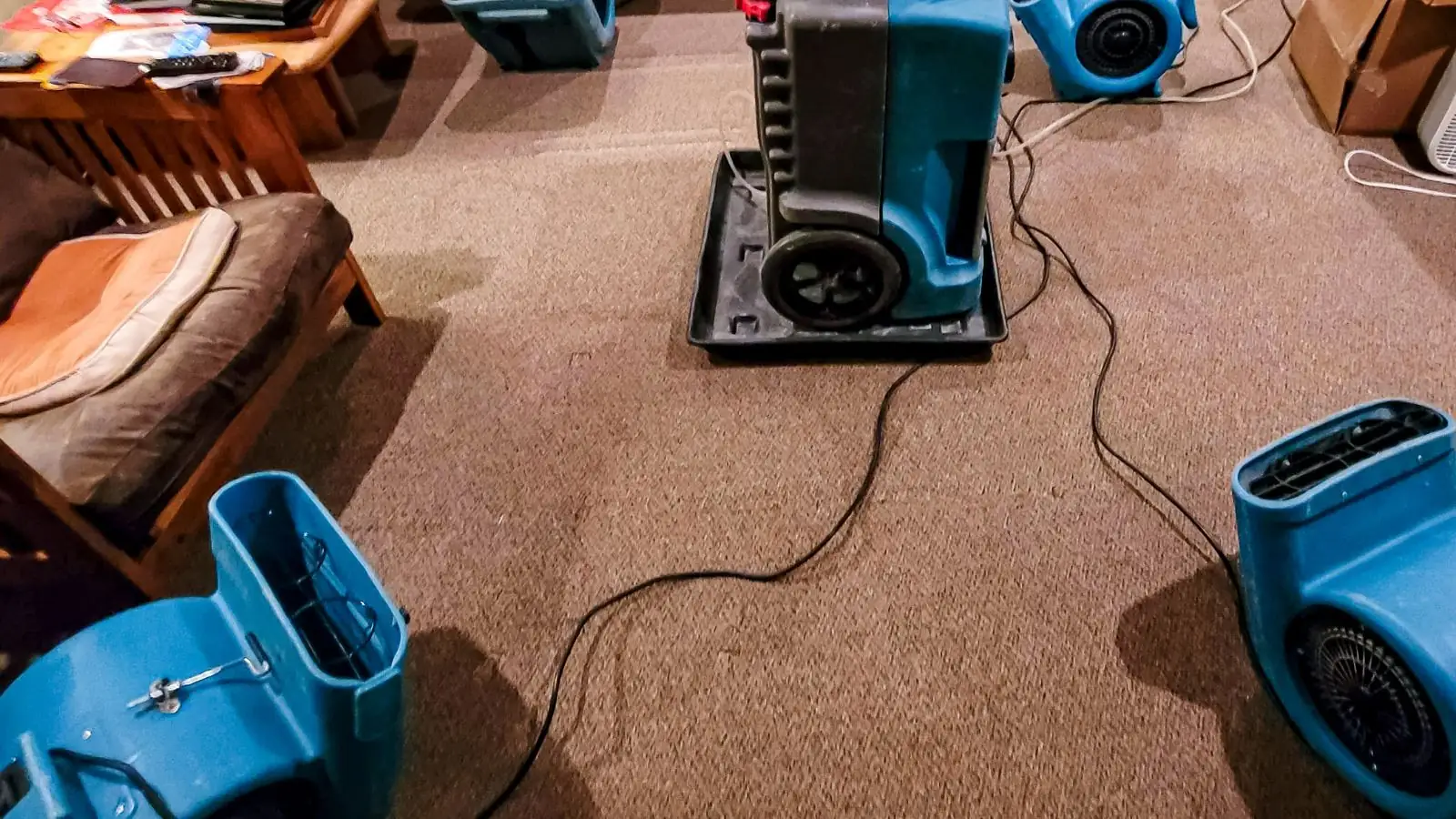
Drying is a science of moving moisture from materials into the air and from the air into a dehumidifier. A crew measures wetness, removes standing water, sets air movers to push air across surfaces and runs dehumidifiers to take moisture out of the room. Then it measures again, adjusts the equipment and repeats until the readings are normal.
The word drying is simple. The craft is knowing where the water went. Water spreads sideways through flooring, up through drywall and into cavities where you cannot see it. A thermal camera and moisture meters show that spread, and the drying plan follows it.
The sequence on a typical job
- Stop and assess: confirm the source is off, check safety and walk the affected area.
- Extract standing water with pumps or extractors.
- Map moisture with meters and a thermal camera, and record the readings.
- Remove materials that cannot be dried, such as wet carpet pad or soaked insulation.
- Place air movers and dehumidifiers according to the readings.
- Return daily or as agreed to recheck readings, move equipment and update the plan.
- Confirm dry standards are met and remove the equipment.
Our water mitigation page describes this work in more detail, including how readings are documented.
The equipment you should expect to see
| Equipment | Purpose | What to look for |
|---|---|---|
| Moisture meter | Reads moisture in wood, drywall and concrete | Readings taken in multiple locations. |
| Thermal camera | Shows cool, wet areas behind surfaces | Used to map the wet zone. |
| Air movers | Push air across wet surfaces | Placed to cover walls and floors, not just one corner. |
| Dehumidifiers | Remove moisture from the air | Sized for the space and running continuously. |
| Drying mats or panels | Pull water from floors | Used for hardwood or other tight floors. |
| Pumps and extractors | Remove standing water | Used first, before drying begins. |
A company that arrives without meters is guessing. A company that sets up equipment and leaves without a plan to return is also guessing. Good drying is measured, and the readings are shared with you.
Need drying today?
Call and we explain what happens on arrival.
Questions to ask before you hire
- How will you measure moisture, and will you show me the readings?
- How many days do you expect drying to take, and what changes the answer?
- Who comes back to recheck, and how often?
- What will you remove, and why?
- What documents will you give me for my insurer?
- How is the price set, and what could change it?
We decline to offer fixed prices over the phone, because a number before inspection is a guess. We explain how the price is set, what drives it and what the written scope will include. Be careful of any company that quotes a precise price before seeing the damage.
Signs of a rushed job
A crew that leaves equipment running with no reading log, that closes walls before readings are dry or that says the job is finished because the surface feels dry deserves questions. Surface dryness tells you little. Moisture can hide in insulation, under flooring and in framing for weeks.
Another sign is a plan that never changes. Water behaves differently from room to room, and the equipment should move as readings change. A good crew adjusts, removes equipment as areas dry and leaves the heaviest drying where it is needed.
What drying costs depend on
Cost follows the number of rooms, the amount of water, the materials affected, how long equipment must run and whether contaminated materials must be removed. A small clean-water job is a very different scale from a multi-room flood with removal. Costs are best discussed after a walk-through.
Sudden and accidental water damage is often covered by homeowners insurance, while long-term seepage and floods are often treated differently. Ask your insurer what applies, keep your records and ask the crew for the drying log and photographs.
After drying: repair or rebuild
Dry is not the same as finished. After drying, damaged flooring, drywall, trim and paint need repair. Some companies do both, and others hand off to a contractor. Our water damage repair page explains the rebuild stage and why it should wait for dry readings.
What to expect in your home during drying
Equipment is loud and runs around the clock, and a dehumidifier warms the room it sits in. You may be asked to keep doors closed, to leave equipment alone and to keep pets and children away from cords and hoses. Plan for a few uncomfortable days, since the noise is the sound of the building drying.
Why the readings come first
Feel is a poor guide, since materials can feel dry on the surface while the core holds water. Readings give you a number that can be compared with a dry reference and written in a log. If a company says a job is done and shows no log, ask for one. The log is also what an insurer or a future buyer wants to see.
Keeping a record
Photograph the damage before work begins, keep a copy of every reading and save the invoice with a note of the dates equipment ran. These records are small and they make a later claim or sale much easier.
If your property is in Santa Barbara rather than Goleta, the Santa Barbara page describes how we cover the city, and the areas page shows the other towns we serve.
Goleta local note: after hours and weather
Pipes break and appliances fail at night, and storm water does not wait for business hours. We answer the line at (805) 291-8940 around the clock, and we explain what to do while the crew is on the way.
The Goleta Water District describes the valley as semi-arid, with alternating dry and heavy rainfall periods, so a drying company is often called after the first storm of the season.
Drying company questions
How do I know my home is actually dry?
Moisture readings in the affected materials should match a dry reference from the same building. The crew should share them.
Can I rent equipment and dry my home myself?
You can for small clean-water spills. Larger jobs need meters and experience to avoid missed moisture.
How many days does drying usually take?
It depends on the materials and the amount of water, and often takes several days. The readings decide.
Why are there so many fans and dehumidifiers?
Wet buildings hold large amounts of moisture, and air movers and dehumidifiers work together to remove it steadily.
Questions about your own situation?
Call the 24/7 line and describe what you see. Call and we explain what happens on arrival.