
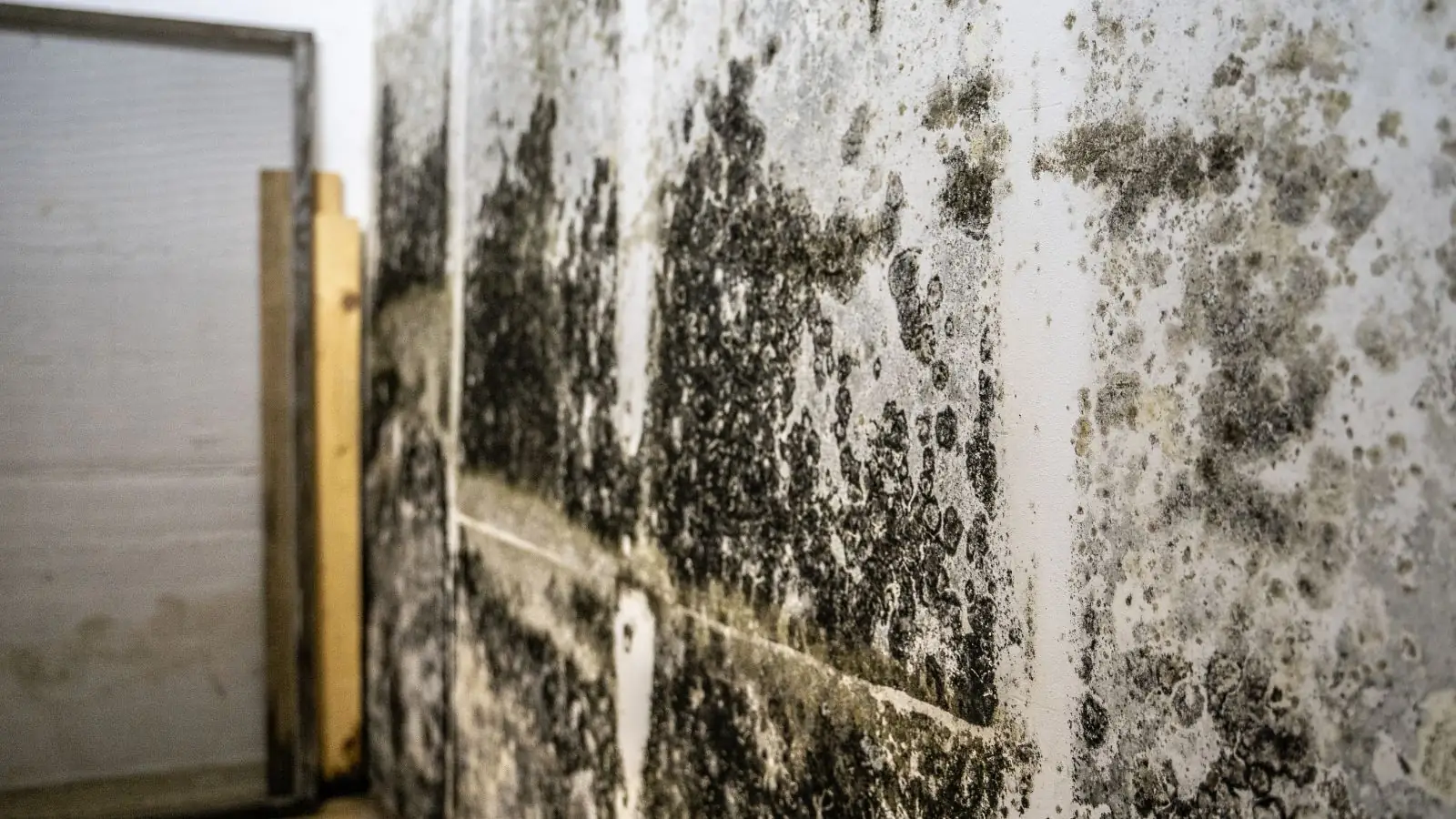
Basement mold usually grows for one reason: the space stays damp. Eliminating it means removing the growth, drying the area and stopping the moisture that came back. The cleanup is the easy part. The lasting fix is controlling water, humidity and air movement so the basement stays dry.
Why basements grow mold
Basements are cooler than the rest of the house, so warm humid air condenses on cold walls and pipes. They also sit against the soil, where water moves through foundation cracks, floor joints and porous concrete. Storage boxes, cardboard and stored fabrics give growth something to feed on.
The result is a space with moisture, food and poor airflow, which is exactly what mold needs. A single flood, plumbing leak or season of poor drainage can start growth, and a damp basement can keep it going for years.
ANSI/IICRC S520 is the published standard for mold remediation, and EPA guidance on mold in the home stresses fixing the moisture first. This guide follows both, and says plainly when a job belongs with a trained crew.
| Source | Sign | Typical fix |
|---|---|---|
| Condensation on walls and pipes | Wet surfaces in summer, musty air | Dehumidifier, insulation on cold pipes. |
| Groundwater through walls or floor | Damp patches, white mineral stains | Drainage and grading, sealing, sump pump. |
| Plumbing leak | Stain or drip near pipes or fixtures | Repair, then dry. |
| Gutters and downspouts | Water at the foundation after rain | Extend downspouts, clear gutters. |
| Dryer vent or bathroom exhaust | Moisture in the air | Vent outside. |
| Past flood not fully dried | Stains and odor | Open and dry affected areas. |
Step one: stop the water
Fix the cause first. That may mean sealing a pipe, redirecting gutters, regrading soil, repairing a window well or adding a sump pump with battery backup. No cleaner works if the water is still arriving.
If a flood or pipe burst started the problem, read about emergency water removal and drying before cleaning begins, since wet materials need to dry before they can be judged.
Step two: remove growth and wet materials
- Move stored items out, and discard anything porous that has visible growth.
- Remove carpet, pad and any wet insulation.
- Cut out drywall that is soft, stained through or covered in growth.
- Scrub hard surfaces such as concrete and framing with detergent and water, then dry them.
- Bag debris before carrying it through the house.
Wear gloves, goggles and a mask rated for fine particles. For areas larger than about 10 square feet, or growth that has spread through the walls, a mold crew is the safer choice. Our mold remediation page explains how containment and negative air are used.
Musty lower level?
Call and we explain how to find the moisture.
Step three: dry the space thoroughly
Use a dehumidifier sized for the basement and run it continuously. Add air movers to push air across walls and floors. Aim for steady, moderate humidity in the living space, and verify with a hygrometer. A basement that smells musty after cleaning is probably still damp.
Concrete releases moisture slowly, and a slab can keep a basement damp for weeks. Moisture readings in walls and framing show whether it is dry enough to rebuild.
Step four: rebuild so mold has less to eat
If you finish a basement, consider moisture-resistant materials. Paperless drywall, inorganic insulation and flooring that tolerates damp conditions all help. Leave a small gap between the bottom of the wall and the slab. Keep stored items on shelves, off the floor and away from the walls.
Keep it away
- Run a dehumidifier during humid months and check the drain line.
- Test the sump pump each season and confirm it has backup power.
- Keep gutters clear and downspouts well away from the foundation.
- Insulate cold water pipes to stop condensation.
- Replace cardboard storage with plastic bins.
- Check for new stains or odors each season.
Air quality, smell and storage
A musty basement odor means damp materials or hidden growth. Opening a window on dry days helps, but a dehumidifier does more. Store items in plastic bins on shelves away from the walls. Avoid cardboard and fabric on the floor, since both hold moisture and feed growth.
Walls, floors and insulation
Concrete and masonry can be cleaned and dried. Wood framing is brushed or sanded to remove surface growth, then dried. Insulation that is wet or carries growth is removed and replaced. Carpet is a poor choice below grade, and tile, sealed concrete or vinyl plank handle moisture better.
Testing and follow-up
After the work, watch humidity with a hygrometer and look at the corners and the base of the walls after wet weather. A basement that stays dry through the next rainy season is the best test. If the odor returns, the moisture source is still active and needs a closer look.
Keep a note of the date of the cleanup, the readings and any repair. A short record is useful for an insurer, a buyer or a future contractor, and it helps you spot changes early.
The Santa Barbara service page explains how the same work applies in the neighboring city, and the areas page lists the other towns near Goleta.
Safety checklist before you touch it
- Turn off power to any wet area before you work near outlets or fixtures.
- Wear gloves, goggles and a mask rated for fine particles.
- Do not sweep, brush dry or blow a fan across a large patch.
- Never mix cleaning products.
- Stop and call a crew if the area is large, inside a wall or follows flood or sewage water.
- Questions about symptoms or sensitivity belong with a physician.
Goleta local note: lower levels, garages and slabs
True basements are less common near the coast than slab-on-grade homes, lower-level garages and crawl spaces. The same rules apply to any space that sits below grade or against soil.
If your lower level is part of a rental or condominium, report moisture in writing. Ask the City of Goleta Building and Safety Division at (805) 961-7552 whether drainage or foundation work needs a permit.
Basement mold questions
Why does my basement smell musty even when it looks clean?
Damp materials or hidden growth. Moisture readings and a look behind finished surfaces find the source.
Is a dehumidifier enough to eliminate basement mold?
It controls humidity, but existing growth on porous materials must be removed.
Can I finish a basement that has had mold?
After the growth is removed, the area is dry and the moisture source is fixed, yes. Use moisture-resistant materials.
How do I know the moisture is solved?
Surfaces stay dry through a wet season, readings stay normal and the odor does not return.
Questions about your own situation?
Call the 24/7 line and describe what you see. Call and we explain how to find the moisture.