
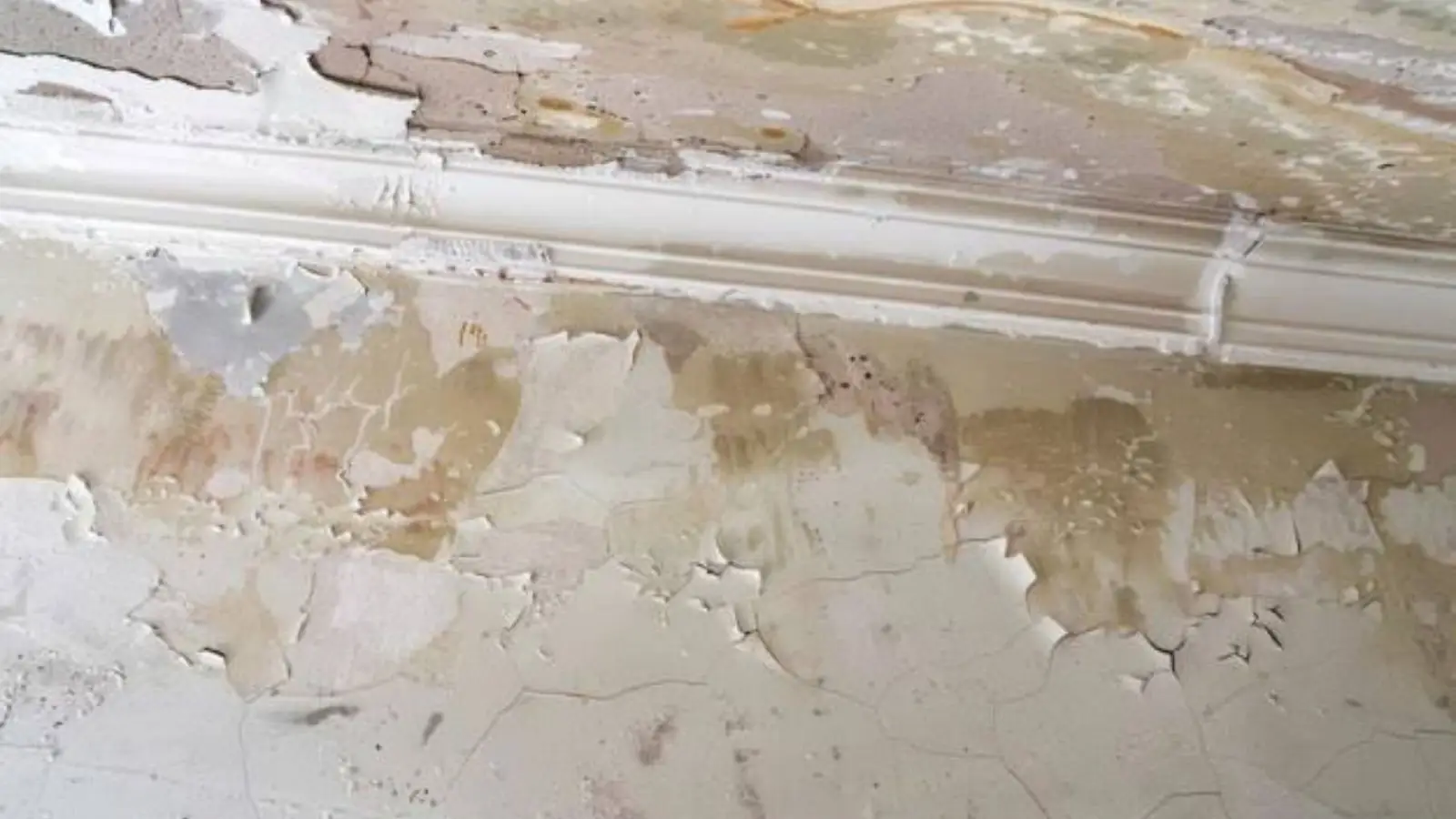
Drywall water damage repair works when the wet section is removed back to dry material and the cavity is dried before new board goes up. It fails when a stained panel is simply painted or patched over. This guide explains what happens to drywall when it gets wet, which damage can be dried in place and how the repair is done so the wall stays dry.
What water does to drywall
Drywall is gypsum between sheets of paper. The paper wicks water upward from the floor, so a wall that sat in an inch of water can be wet a foot or more above the line. The gypsum softens and crumbles, and the paper facing begins to peel.
EPA mold guidance says to dry wet building materials within 24 to 48 hours. That is the window in which many walls can still be saved with fast extraction, air movers and dehumidifiers. After that, removing the wet section is usually safer than waiting.
Cut out or dry in place: how the decision is made
| Condition of the wall | Typical decision | Reason |
|---|---|---|
| Clean-water splash, wall firm, dry reading within days | Dry in place | The board retains its strength. |
| Bottom few inches wet, still firm | Dry in place or small cut | Depends on insulation and readings. |
| Soft, crumbling or peeling | Cut out | The gypsum has failed. |
| Sewage or floodwater | Cut out above the water line | Contaminated porous material. |
| Stained but dry, source fixed | Prime and repaint | Stain only, no remaining moisture. |
The decision also depends on what is behind the board. Insulation holds water longer than the drywall does, and a wall that looks fine on the face can be wet inside. A moisture meter and a thermal camera show what a fingertip cannot.
How the repair is done
- Mark a flood cut a few inches above the highest wet reading and cut straight across.
- Remove wet drywall and any wet insulation behind it.
- Dry the framing and the cavity until readings are dry.
- Install new drywall, tape, finish and sand the seams.
- Prime, texture to match and paint the whole wall corner to corner.
The cut should be straight and level so that a new panel butts up cleanly. A ragged cut leaves seams that show through paint. When water went behind cabinets or a tub surround, the cut has to go wider so the cavity can be dried.
Wet drywall in Goleta?
Call and describe the wall. We explain what can be saved.
How to check a wall before you decide
Start with the surface. Press a fingertip against the bottom few inches of the wall and look for softness, a cool feel or a swollen baseboard. Peeling tape at the corners, bubbling paint and a faint musty smell all suggest moisture is still inside.
Then look at what the wall touches. Water that sat on a floor will have wicked into the baseboard, the bottom plate and the insulation, and none of those show from the face of the board. A small test hole behind a switch plate or at the baseboard lets a meter probe reach the cavity without a large cut.
Walls that share a cavity with a bathroom, kitchen or laundry deserve extra suspicion. A wet wall on one side of a plumbing chase is often wet on the other side too, so check both rooms before you close anything.
Cost factors for drywall repair
The price of a drywall repair depends on how many square feet come out, whether insulation is replaced, how many coats of compound the finish needs and how hard the texture is to match. A single flood cut along one wall is a smaller job than a room where every wall was wet. Ask for the scope in writing and expect a crew to explain what drives the number, since no fixed price is honest before the walls are measured.
Common mistakes
- Painting over a stain before the wall has been checked with a moisture meter.
- Closing up a wall cavity before the framing reads dry.
- Leaving wet insulation in place because it looks fine.
- Cutting out only the visibly stained part and leaving wet material above it.
- Using standard drywall in a place that stays damp, such as behind a tub.
Matching the finish on a repaired wall
A repaired wall should look like the rest of the room. Joint compound is applied in thin coats and sanded smooth, and texture is matched where the wall had it. A primer that seals new drywall evenly prevents patches that show through paint.
Paint the wall from corner to corner. Touching up only the repair almost always leaves a visible edge, particularly in rooms with strong natural light. A crew that does water damage repair plans for the finish at the start, and not as an afterthought.
If the whole wall is wet, a crew usually dries it first with water mitigation equipment and then repairs it. For heavy water, flood damage restoration covers contaminated cases.
Baseboards, trim and paint after the wall is closed
Baseboards that were pulled during drying are reinstalled after the wall is finished, and any swollen trim is replaced. Caulk the top edge and paint the trim last so the wall and trim match. Let each coat of primer and paint cure for the time the label gives, and keep the room ventilated while it does.
Leave a few extra inches of paint for later touch-ups, and note the brand and color name. A repaired wall that shows a different sheen in side light is the usual complaint, so use the same product on the whole wall.
If your wall is in Santa Barbara, see how we cover the city on the Santa Barbara page, or check the areas we serve around Goleta.
Goleta local note: flood maps, insurance and drywall after storms
The City of Goleta rebuilt the San Jose Creek channel in Old Town and raised its design capacity from a 25-year to a 100-year storm, with a ribbon cutting in May 2014. The city said FEMA maps were expected to be redrawn to remove about 200 parcels from the flood plain after the bridge phase. Check the FEMA Flood Map Service Center for your own parcel.
The California Department of Insurance says standard homeowners insurance does not cover flood damage. Knowing your flood status before a storm changes whether wet drywall becomes an insurance claim or a cost you carry yourself.
Drywall water damage questions
How high should a flood cut go on a wet wall in Goleta?
It goes a few inches above the highest wet moisture reading, which is often higher than the visible water line. A meter or a thermal camera finds that point.
Can wet drywall be dried instead of replaced?
Sometimes. Clean-water splashes caught quickly, on firm board, can dry in place. Soft, crumbling or contaminated drywall is cut out.
Is a stained wall always wet?
No. A stain can remain after the wall has dried. A moisture reading tells you whether the wall needs more drying or only repainting.
Do I need a special drywall for bathrooms?
Moisture-resistant board is common in wet areas, and a contractor can advise what suits your room. It does not replace fixing the leak.
Questions about your own situation?
Call the 24/7 line and describe what you see. Call and describe the wall. We explain what can be saved.