
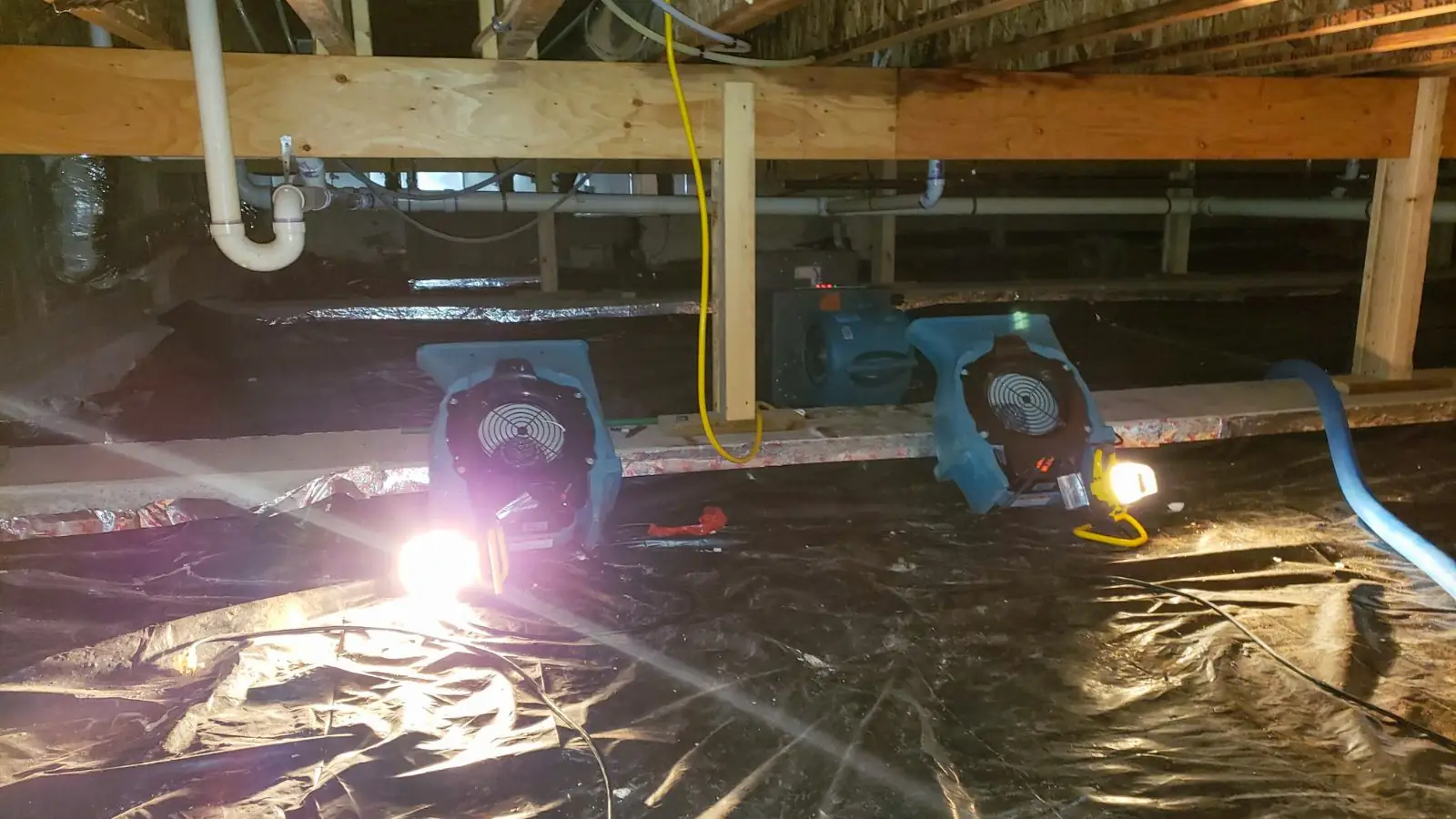
Crawl space mold remediation removes growth from joists, subfloor and insulation and then fixes the moisture that fed it. Crawl spaces are cramped, dark and often damp, which makes growth easy to miss and hard to reach. This guide explains why crawl spaces grow mold, what remediation involves and how to keep the space dry once the work is done.
Why crawl spaces are prone to mold
A crawl space sits between the soil and the floor above. Moisture rises from the ground as vapor, water enters through vents and foundation gaps and pipes sweat or leak. Wood joists and the underside of the subfloor are organic and can support growth once they stay damp.
Because the space is out of sight, problems often run for a long time. Owners notice a musty smell inside the house, cold floors or sagging insulation, and only then look underneath. By that point growth may cover a large area.
| Source | What it looks like | Typical remedy |
|---|---|---|
| Ground vapor | Damp soil, humidity, condensation | Vapor barrier on the soil. |
| Plumbing leak | Stains, drips, wet insulation | Repair and dry. |
| Drainage | Standing water after rain | Grading, drain, sump. |
| Vents and openings | Humid air entering in damp seasons | Seal or manage vents. |
| Failed insulation | Sagging, wet batts | Remove and replace. |
| HVAC condensation | Drips from ducts | Repair and insulate ducts. |
What remediation involves
- Assess the space for moisture, structure and the extent of growth.
- Fix plumbing and drainage problems so water stops arriving.
- Set up containment and negative air, with protective gear for workers.
- Remove wet insulation and any materials too affected to clean.
- Clean or sand wood surfaces to remove growth, and vacuum with filtered equipment.
- Dry the space with dehumidifiers and air movers.
- Install or repair a vapor barrier and improve ventilation or sealing as the site needs.
Cleaning wood in a crawl space is harder than it sounds. Joists and subfloor are rough and have many corners, so the crew uses brushes, sanders or dry ice blasting depending on the condition. The goal is to remove the growth from the surface and let the wood dry.
Our mold remediation page describes the containment and cleaning steps, and water mitigation explains how drying is measured.
Insulation and vapor barriers
Wet insulation holds moisture against the subfloor and is usually removed. A vapor barrier, usually heavy plastic across the soil, reduces ground vapor. Edges should be overlapped and sealed, and the barrier should be inspected for tears. Some homes also use sealed or conditioned crawl spaces, which change how air and moisture move.
There is no single correct crawl space design. The right choice depends on soil, drainage, the home and the local climate. A contractor can explain the options and what they cost. We explain the factors involved before work starts, since pricing without seeing the space would be a guess.
Damp crawl space?
Call and we explain what to look for before anyone goes under.
When to call for help
- A musty smell indoors that gets stronger near floors.
- Visible growth on joists or subfloor.
- Standing water or damp soil.
- Sagging or wet insulation.
- Signs of pests or rot.
- Any growth after a leak or flood.
Do not crawl into the space with a damaged floor above or with standing water and live wiring. Space is tight, light is limited and a fall or a shock is a real risk. A crew has equipment for a safe entry.
Keep the crawl space dry afterwards
Check the vapor barrier after storms, clear gutters and make sure downspouts discharge away from the foundation. Run a dehumidifier if the space is sealed. Look under the house once or twice a year to catch leaks early. Early detection is cheaper than any remediation.
What an inspection looks for
- Moisture readings in joists, subfloor and sill plates.
- Condition and coverage of the vapor barrier.
- Wet, sagging or missing insulation.
- Leaks at pipes, drains and ducts.
- Standing water, damp soil and drainage paths.
- Signs of pests, rot or damaged supports.
The inspection shapes the plan, and a written list of findings with photographs is a fair thing to ask for. It lets you compare scopes between companies and shows what the work is meant to fix.
Ventilation, sealing and dehumidifying
Older homes were built with vents to let air through the crawl space. In humid seasons, that air can bring in moisture rather than carry it away. Some homeowners seal the vents and add a dehumidifier, while others improve airflow. The right choice depends on the soil, the climate and the structure, and a contractor can explain the tradeoffs.
After the work is done
Ask for photographs of the cleaned surfaces, a record of moisture readings and a description of what was installed. Check the space again after the first heavy rain and at the start of each wet season. Small changes, such as a new damp patch or a torn barrier, are easy to fix when caught early.
The Santa Barbara service page explains how the same work applies in the neighboring city, and the areas page lists the other towns near Goleta.
Goleta local note: older foundations and permits
Homes with raised floors and crawl spaces are common across coastal California. If your remediation involves structural work, plumbing changes or new venting, the City of Goleta Building and Safety Division at (805) 961-7552 can say whether a permit is needed.
Photograph the space before any work, and keep the report and photographs for an insurer or a future buyer.
Crawl space mold questions
How do I know there is mold in my crawl space?
A musty smell inside, visible growth on wood, damp soil and wet insulation all point to it. Inspection under the house confirms.
Is a vapor barrier enough?
Not alone. It reduces ground vapor, but leaks, drainage and ventilation also need attention.
Can the wood be saved?
Often, if it is solid. Growth on the surface is cleaned or sanded, and rotted wood is replaced.
Does crawl space mold affect the rooms above?
Air moves between a crawl space and the home, so a musty smell indoors is common. Fixing the space usually removes it.
Questions about your own situation?
Call the 24/7 line and describe what you see. Call and we explain what to look for before anyone goes under.