
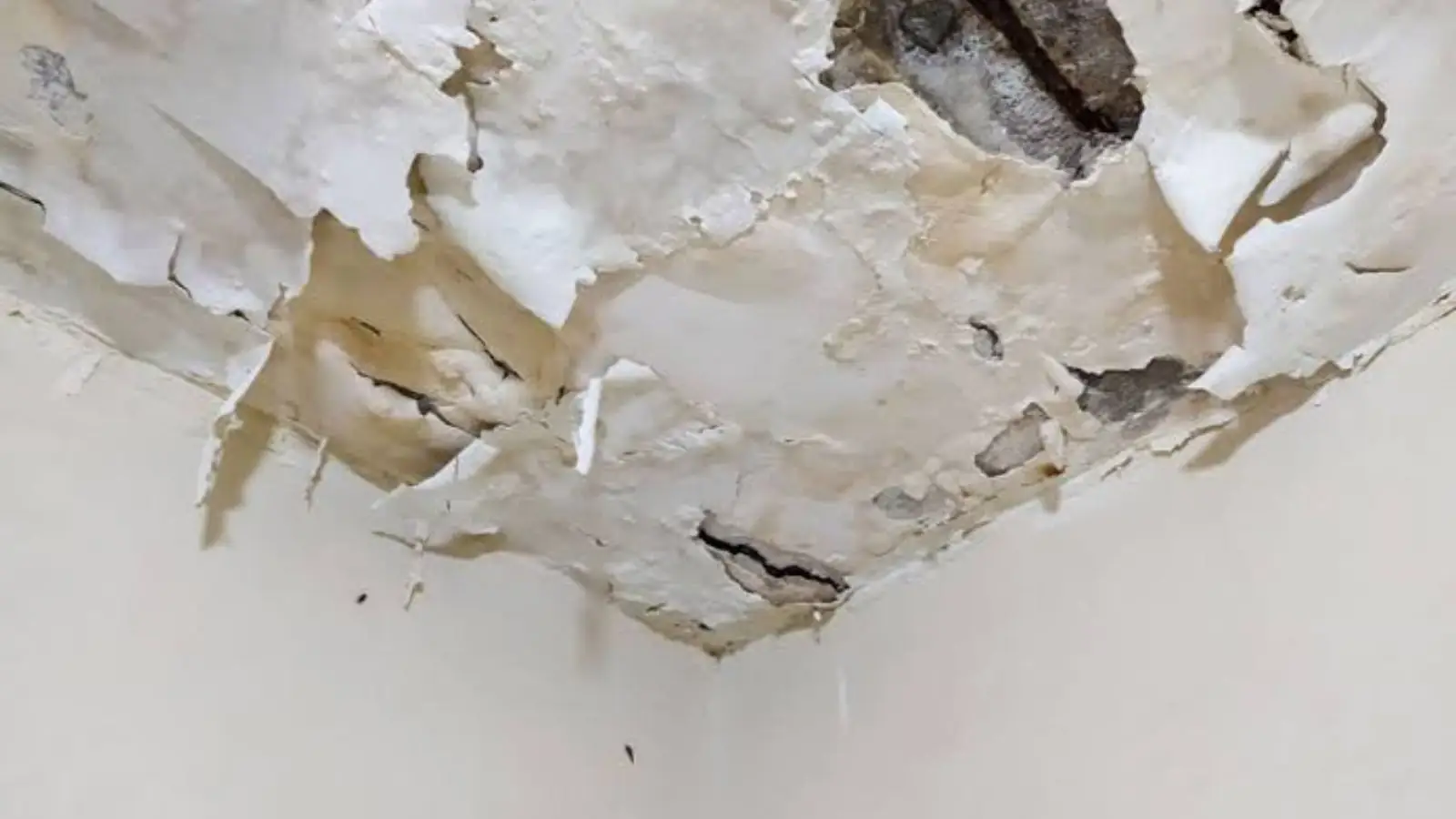
A brown ring on the ceiling is the most common sign of water damage in a Goleta home, and fixing it is more about order than about paint. The sequence that works is stop the source, confirm the ceiling is dry, cut out what is ruined, rebuild and finish. This guide walks through each step and explains when the job is better handed to a restoration crew.
Find and stop the source before you repair anything
A ceiling stain is a symptom. The water came from somewhere above, and until that source is fixed any repair is temporary. Common sources include a bathroom or laundry on the floor above, a roof leak, a window or door that lets in rain, a pipe inside the wall and an air conditioner condensate line.
Look at the room above first. Check around tubs, toilets, washing machine hoses and under sinks. In a single-story home look at the roof above the stain, flashing around vents and the attic insulation for dark, damp patches.
If you cannot find the source, a plumber, a roofer or a moisture reading from a restoration crew will narrow it down. A thermal camera shows cool, wet areas behind a finished ceiling, which often points toward the path the water took.
When a ceiling is unsafe and needs to come down
Wet drywall is heavy and weak. A ceiling that bulges, sags or drips can fall without warning, so keep people out from underneath and move furniture aside. Never poke at a bulge while standing under it. If a light fixture sits in or near the wet area, treat that circuit as unsafe until it is checked.
A small, flat stain with no soft spot is a different situation from a sagging section. The flat stain may dry in place if the source has been stopped. A sag means the board has lost its strength, and that section needs to be cut out.
Check moisture before you close anything up
Appearance is a poor guide to dryness. A ceiling can look finished and still hold moisture in the insulation above it or in the back of the board. A moisture meter gives a number you can compare against a dry section of the same ceiling.
If framing or insulation is damp, it needs drying before new drywall goes up. Air movers and a dehumidifier pull moisture out of the cavity, and the crew rechecks the readings until they match the dry reference. Closing a damp cavity is how stains come back and how mold starts on the back of new board.
Wet ceiling in Goleta?
Call and describe the stain. We explain what to check first.
The repair sequence from wet to finished
- Stop the source and photograph the ceiling and the room above.
- Check moisture with a meter. Anything still wet needs drying, not repair.
- Cut out the wet or sagging drywall back to dry, solid material, along with any wet insulation above it.
- Dry the cavity with air movers and a dehumidifier if framing or insulation is damp.
- Hang new drywall, tape and finish the seams, then match the ceiling texture.
- Prime with a stain-blocking primer and paint the whole ceiling from wall to wall so no patch shows.
The cut-out section is usually a rectangle with edges on framing, which gives the new board something solid to fasten to. Smaller holes can be patched without framing support, though a larger repair needs it.
Texture and paint: making the repair disappear
The part people notice afterwards is the finish. Ceilings come with different textures, such as smooth, orange peel, knockdown or a heavier spray. Matching one takes a sample, a few test patches and patience, because texture dries lighter than it looks wet.
Paint should go on the whole ceiling, edge to edge, rather than only over the patch. Even the same can of paint looks different on an old, aged surface, and a patch with visible edges is the first thing a buyer or a landlord notices. A stain-blocking primer under the paint stops any remaining discoloration from bleeding through.
DIY or professional
| Situation | Reasonable DIY? | Why |
|---|---|---|
| Small flat stain, source fixed, dry reading | Yes | Seal, prime and repaint. |
| Cut-out section about the size of a plate | Often | Patch, tape and match texture. |
| Large sag, several rooms or soaked insulation | No | Heavy wet material and hidden moisture. |
| Contaminated water from a toilet or drain | No | Contaminated materials need proper removal. |
| Stain keeps returning after repainting | No | An active or hidden source remains. |
When the ceiling is larger, the water was contaminated or the source is unclear, water damage repair by a crew that dries first is the better route. If water is still on the floor below, start with emergency water removal.
Safety checks before you start work
Turn off the power to any room where the ceiling is wet or a light fixture is close to the stain. Water and wiring do not mix, and a fixture can hold water inside its housing even when the ceiling looks only mildly stained. If the lights flicker or trip a breaker, leave the circuit off and have an electrician look at it.
Wear a dust mask, eye protection and gloves when cutting out drywall. Old ceilings can release fine dust and insulation fibers, and wet material is heavier than it looks. Lay plastic on the floor first, since a ceiling that has been wet for a while can let go in large pieces.
What changes the cost of a ceiling repair
The price depends on how much drywall is replaced, whether insulation is wet, how large the finished area is and how hard the texture is to match. A small patch on a flat ceiling is a very different job from a textured ceiling across two rooms.
We explain scope and how pricing is set before any work begins, and no fixed number is honest until someone has seen it. Sudden and accidental water damage is often covered by homeowners insurance, while gradual leaks and neglect often are not. Take photos, keep receipts and ask your insurer what applies.
If the leak is in Santa Barbara rather than Goleta, the Santa Barbara service page explains how we cover the city, and the service area page lists the other nearby towns.
Goleta local note: permits, landlords and condo rules
Permit rules vary with the work, so ask the City of Goleta Building and Safety Division at (805) 961-7552. Its public counter is open Monday and Wednesday mornings and by appointment, and the office is closed on Fridays.
The Census Bureau puts Goleta at 50.7 percent owner-occupied, so many ceilings belong to a landlord or an association. If you rent or live in a condominium, report the leak in writing before anything is cut.
Ceiling water damage repair questions
Do I need a permit to repair a water-damaged ceiling in Goleta?
It depends on the scope. A small patch is different from rebuilding framing or changing wiring. Ask the City of Goleta Building and Safety Division, since permit rules vary by project.
Can I paint over a ceiling stain?
Only after the source is fixed and the material is dry. Painting a wet ceiling hides the stain for a while and then the stain returns.
How long does a ceiling take to dry?
It depends on how much water there was and what it soaked. The moisture reading, not the calendar, tells you when it is dry.
Who pays if the leak came from the unit above me?
That is settled between the owners and their insurers. Photograph everything and notify the association or landlord in writing the same day.
Questions about your own situation?
Call the 24/7 line and describe what you see. Call and describe the stain. We explain what to check first.