
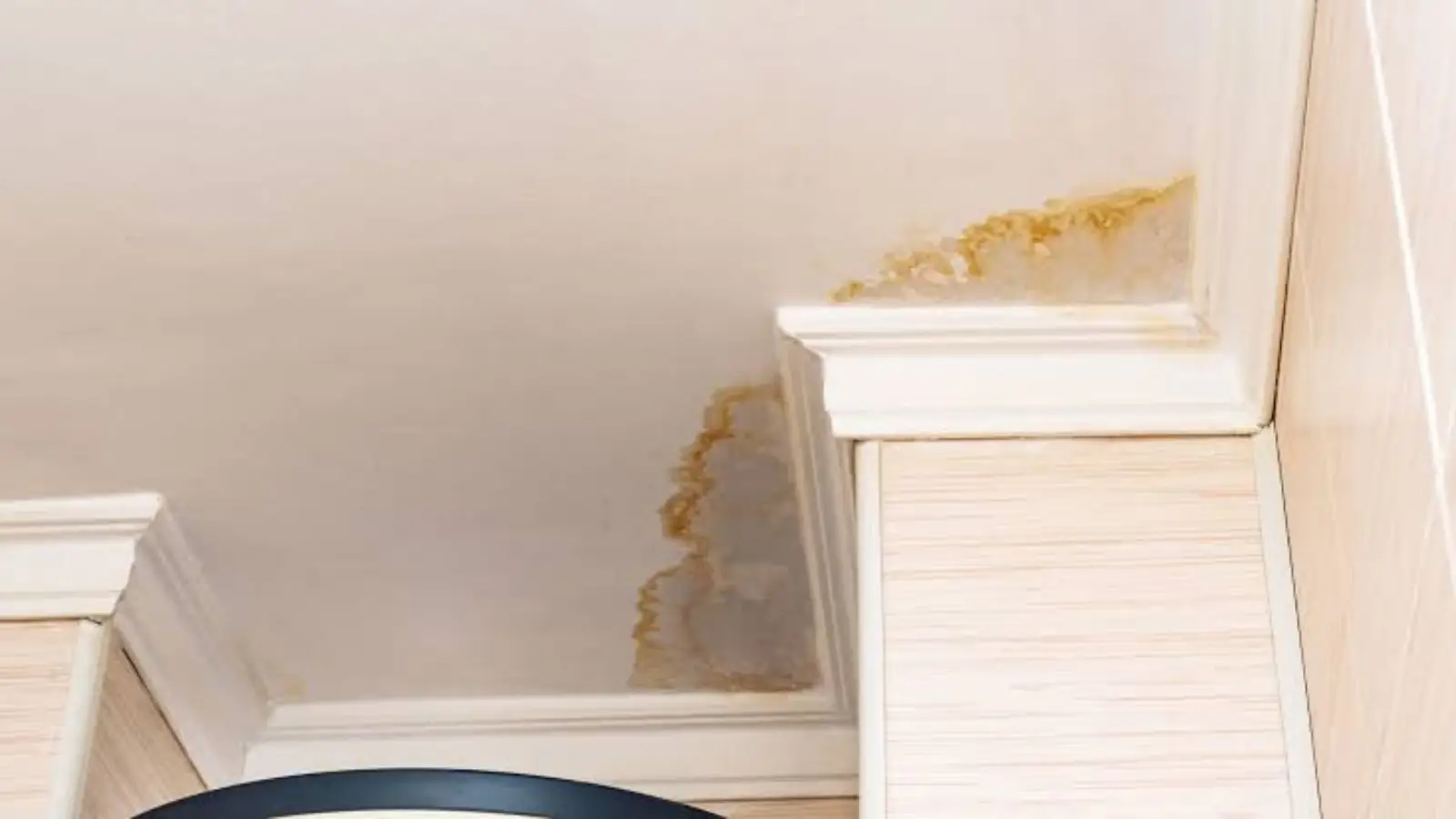
A ceiling stain is a clue, not a diagnosis. Its color, edge and shape tell you whether the water is old or new, whether it is still arriving and how far it has traveled. Reading the stain properly saves money, because it separates a one-time spill from a leak that needs a plumber or a roofer before any repair begins.
What the stain is telling you
| What you see | What it often means | What to do |
|---|---|---|
| Light yellow or tan patch with a soft edge | A new or recent leak that is still wet | Find the source today and check for a soft spot. |
| Brown ring with a darker outer edge | Repeated wetting and drying over time | Look for a slow leak or condensation. |
| Stain that changes after rain | A roof, flashing or window leak | Check the roof and wall openings. |
| Stain that grows when someone showers | A drain, tub or supply leak above | Check the bathroom above. |
| Bubbling paint with a damp feel | Active moisture inside the board | Take a moisture reading before repainting. |
| Dark spots with a musty smell | Moisture that has been present a while | Treat it as a moisture problem and call for help. |
Edges tell you as much as color. A sharp ring usually marks where the water stopped drying and then came back. A soft, spreading edge usually means more water is on the way.
Where the water usually comes from
Most stains in multi-level buildings begin at a bathroom, a laundry room or a kitchen above. A toilet supply line, a tub overflow, a failed seal around a shower pan and a washing machine hose can all leak into the cavity beneath.
In a single-story house the cause is more often a roof edge, a skylight, a vent flashing or an air conditioner condensate line. Condensation is the quiet one. Cold supply pipes and air conditioning ducts in an attic or wall can sweat and soak insulation over time. The stain appears slowly, and without an obvious leak it is easy to blame the wrong thing.
How to test before you tear anything out
- Put tape around the edge of the stain and mark the date to see if it grows.
- Run the fixtures above one at a time and watch for changes below.
- Press gently at the center of the stain. A soft or spongy spot means the board is wet.
- Use a moisture meter if you have one. A restoration crew uses meters and a thermal camera to map the wet area without opening it.
- Take photos every day until the source is found.
A thermal camera shows cooler, wet areas behind finished surfaces. It will not tell you the source, but it shows how large the problem is and where to look next. That is often enough to avoid cutting a larger hole than necessary.
Stain on the ceiling?
Describe it by phone and we explain what to check.
Old stain or active leak
Many ceilings carry stains from a leak that was fixed years ago. The stain stays even though the material is dry. Without a reading you cannot tell the difference, and a dry old stain does not need a repair beyond stain-blocking primer and paint.
An active leak looks different over time. The stain edge moves outward, the paint softens and the board feels cool and slightly damp. If you see any of that, stop guessing and get a reading. The cost of one visit is small next to the cost of a ceiling that fails.
Telling a roof leak from a plumbing leak or condensation
The timing of the stain is the best clue. A stain that grows only after rain points to the roof, a window or a wall opening. A stain that grows after someone uses a shower, a washing machine or a dishwasher points to plumbing. A stain that grows slowly with no link to either, often in summer, points to condensation on a cold pipe or a duct.
Location helps too. Stains near an exterior wall or under a roof ridge lean toward the roof. Stains in a line, following a joist, lean toward a pipe. Stains in the middle of a room below a bathroom point at the tub, toilet or shower pan above. Write down what you see and when, because a plumber or a roofer will ask for exactly that.
What to write down for a landlord, an association or an insurer
Photograph the stain from the same spot every day, with a coin or a tape measure in the frame for scale. Note the date, the weather and what was running upstairs. If you rent or live in a condominium, send the report in writing the same day, since the date of notice can matter later.
Insurers usually separate sudden and accidental water damage from long-term seepage, and records help show which one you have. Keep receipts for any emergency work, and ask your insurer what applies before any permanent repair begins.
What happens once the source is found
If the area is wet, drying comes first. Water mitigation uses air movers and dehumidifiers to pull moisture out of drywall and insulation, with daily readings. Once the ceiling reads dry, the repair is a matter of cutting out what failed and rebuilding.
If the ceiling is sagging, or a leak has soaked insulation, the safest plan is to open it up. Emergency water removal is the right call if water is still pooling on the floor below.
When a stain means call someone today
Most stains can wait a day while you look for the cause. A few cannot. Call right away if the ceiling is dripping, if the board is sagging, if a light fixture is wet or if the stain is growing as you watch. In those cases the water is still arriving, and every hour adds more wet material to the cleanup.
The Santa Barbara page explains how the same steps apply in the neighboring city, and the service area page lists the towns we cover.
Goleta local note: dry spells and first rains
The Goleta Water District describes the Goleta Valley as semi-arid, with alternating drought and heavy rainfall periods. After a long dry spell, a roof flashing that has cracked or a gutter filled with debris often gives itself away at the first big storm, and a new ceiling stain is how it shows up.
If a stain appears after rain and not after showers, check the roof or call a roofer before opening the ceiling. A roof inspection is best done before the wet season, not after it.
Ceiling water damage questions
Why did a ceiling stain appear in Goleta after the first storm of the season?
A roof that stayed dry through a long dry spell can reveal worn flashing, cracked sealant or blocked gutters in the first heavy rain. The stain follows the path the water takes through the attic and into the ceiling.
Is a ceiling stain always a sign of an active leak?
No. Some stains are old and dry, but you can only tell by checking for moisture. Mark the edge, watch it and take a reading.
Should I cut a hole in a bulging ceiling?
Only a trained crew should do this, with the area cleared and power off. A bulge holds water and can fail, so keep people out from underneath and call.
Will painting the stain with primer fix it?
Primer covers the color but not the moisture. Use it only after the source is fixed and the ceiling reads dry.
Questions about your own situation?
Call the 24/7 line and describe what you see. Describe it by phone and we explain what to check.