
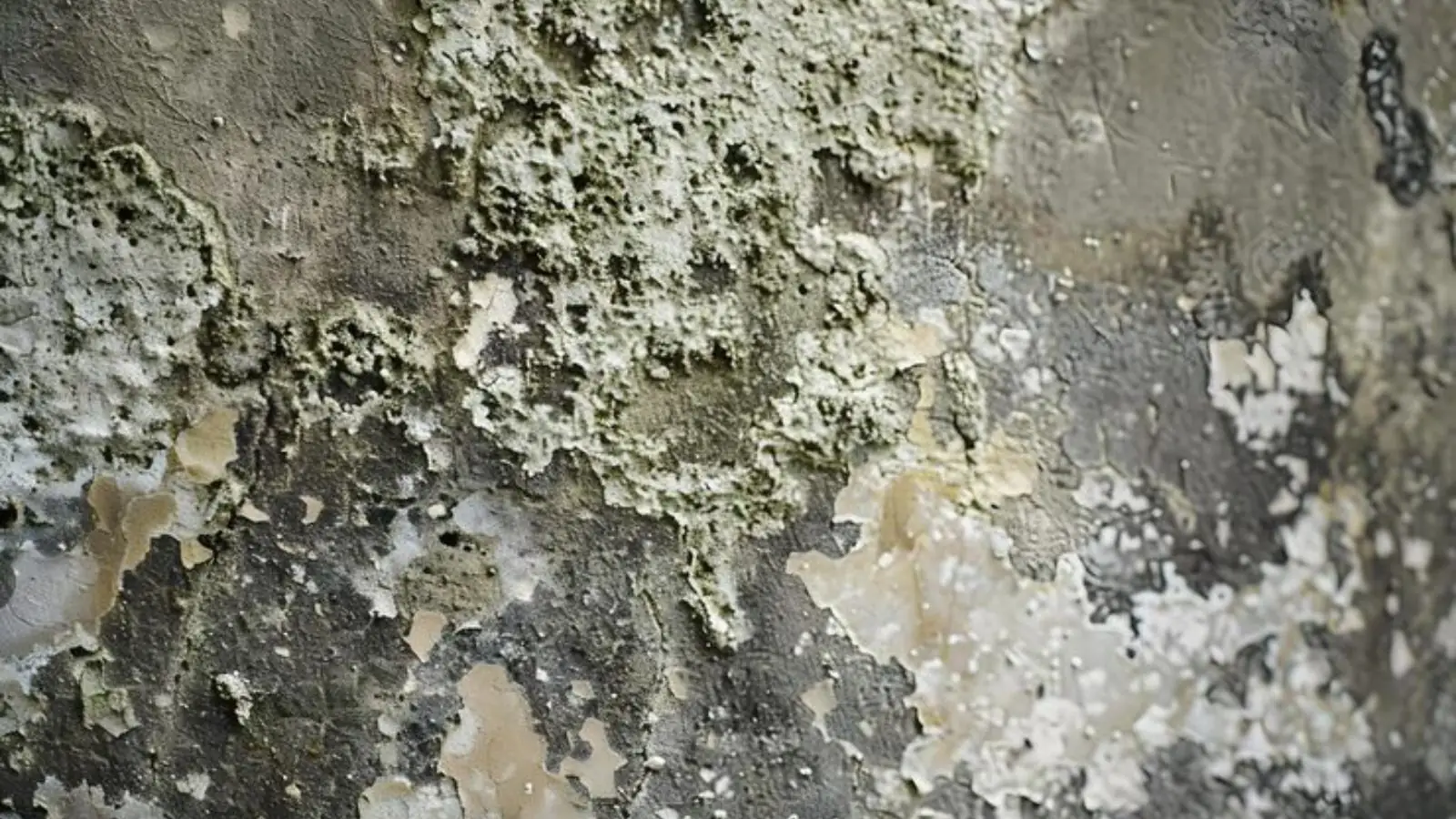
Black mold versus mildew is one of the most common questions homeowners ask, and the honest answer is that color alone does not settle it. Both are fungi, both grow where moisture lingers and both show up as spots on bathroom walls, window frames and basement corners. What matters for a homeowner is not the label but the moisture that lets either one grow.
What mildew is and what it looks like
Mildew usually describes surface growth that is flat, powdery or downy, often gray, white, yellow or light brown. It sits on top of materials such as shower tile, grout, window sills and fabric, and it typically wipes off. People often meet it first in a bathroom or on a damp closet wall.
The word is informal. Mildew is a type of mold in plain language, and the same moisture conditions produce both. When someone says mildew, they usually mean a lighter, thinner surface growth that has not yet worked into the material beneath.
What people mean by black mold
Black mold is a common name for dark, often greenish-black growth. It tends to look fuzzy or slimy and can appear on drywall, wood, ceiling tiles and paper surfaces that stay wet for long periods. People often use the term for any dark growth, but color is a weak guide to the type of organism.
A dark patch is not a reason to panic and not a reason to ignore it either. The right response is to find the moisture source, assess how large the area is and decide whether it can be cleaned or needs a trained crew. The EPA mold guidance says controlling moisture is the key to controlling growth.
| Feature | Mildew | Black or dark mold |
|---|---|---|
| Typical color | White, gray, yellow, light brown | Dark green, brown, black. |
| Texture | Flat, powdery, downy | Fuzzy, slimy or clustered. |
| Where it grows | Tile, grout, fabric, sills | Drywall, wood, paper, ceiling tile. |
| Cleaning | Often wipes off hard surfaces | May have grown into porous material. |
| Moisture level | Humidity and condensation | Longer or heavier wetting. |
| Safe next step | Clean and fix the moisture | Fix the moisture and assess the size. |
Do not rely on the table to identify a species. Only a laboratory test can tell one organism from another, and even then, the practical response is the same: remove the moisture and remove the growth.
Why color is not the answer
Many molds look dark in the right conditions, and some that look black are not. Lighting, surface and age change how growth looks. Judging by color often leads to either unnecessary worry about a harmless-looking stain or unwarranted calm about a patch that is spreading.
What tells you more is the context. Did the surface get wet and stay wet. Is the growth spreading. Does it come back after cleaning. Is it on a porous material such as drywall. Those questions drive the plan more than the shade of the spot.
Spots on a wall?
Call and describe them. We explain what to check.
How to respond to a small patch
- Fix the moisture first, such as a leaking pipe, a window that sweats or a bathroom without enough ventilation.
- Wear gloves, eye protection and a mask rated for fine particles.
- On hard surfaces, scrub with detergent and water and dry the area completely.
- Discard porous items such as ceiling tiles or carpet that are covered in growth.
- Watch the area for a few weeks. Regrowth means the moisture has not been solved.
EPA guidance says that areas larger than about 10 square feet generally call for professional help. Large areas, growth inside walls and growth that follows sewage or flood water also call for a trained crew.
When to call a professional
Call a mold remediation crew if growth covers a large area, if it keeps coming back, if it follows a flood or sewage backup or if you suspect hidden growth behind a wall. A crew sets up containment, uses negative air, removes affected materials and cleans surfaces so spores are not spread through the house. Our mold remediation page describes the process.
Do not disturb a large patch yourself with a dry brush or a fan. Doing so spreads fine particles and makes the cleanup bigger. If you are unsure, photograph the area and call.
Fixing the moisture is the real cure
Mold needs moisture, a food source and time. Remove the moisture and the growth stops. Common fixes include repairing leaks, adding or running bathroom fans, venting dryers outdoors, using a dehumidifier in damp rooms and keeping indoor humidity moderate.
A hygrometer costs little and shows whether indoor air stays damp. Condensation on windows, a musty smell and peeling paint are all signs that a room needs attention. If water damage started the problem, water mitigation drying should come before any mold cleanup.
Common places each one appears
Mildew is typically found on shower curtains, window sills, bread boxes and the grout of a tub surround. Darker, deeper growth is more often found on the back of drywall, on baseboards after a leak, on wet ceiling tile and in crawl spaces. The place often tells you how long the surface has been damp.
What a test can and cannot tell you
A lab can name the species in a sample, but that rarely changes the practical plan. A small patch is cleaned, a large patch is removed and the moisture is fixed either way. Testing makes sense when an insurer, a landlord or a buyer asks for it, or when you want to confirm that a cleaned area is clear.
The Santa Barbara service page explains how the same work applies in the neighboring city, and the areas page lists the other towns near Goleta.
Goleta local note: coastal humidity and bathrooms
The Goleta Water District describes the valley as semi-arid, but a coastal home can still hold moisture in bathrooms, laundry rooms and shaded north walls. Poorly vented bathrooms are a common place for surface growth to start.
If you rent, tell the landlord about recurring growth in writing and keep photographs. In a condominium, ask the association whether the leak or condensation comes from a shared system.
Black mold and mildew questions
Is black mold different from mildew in a Goleta home?
Mildew is usually a lighter, flatter surface growth and black mold is a darker, fuzzier growth. Both mean there is moisture. Color is not enough to identify either one.
Can I clean mildew with household cleaner?
On hard surfaces, yes. Use detergent and water, wear protection and dry the area. Fix the moisture or it returns.
Do I need a test to know what it is?
Usually not. The response is to fix the moisture and remove the growth, whatever the species.
When is mold too big to handle myself?
EPA guidance suggests professional help for areas larger than about 10 square feet or for growth inside walls.
Questions about your own situation?
Call the 24/7 line and describe what you see. Call and describe them. We explain what to check.