
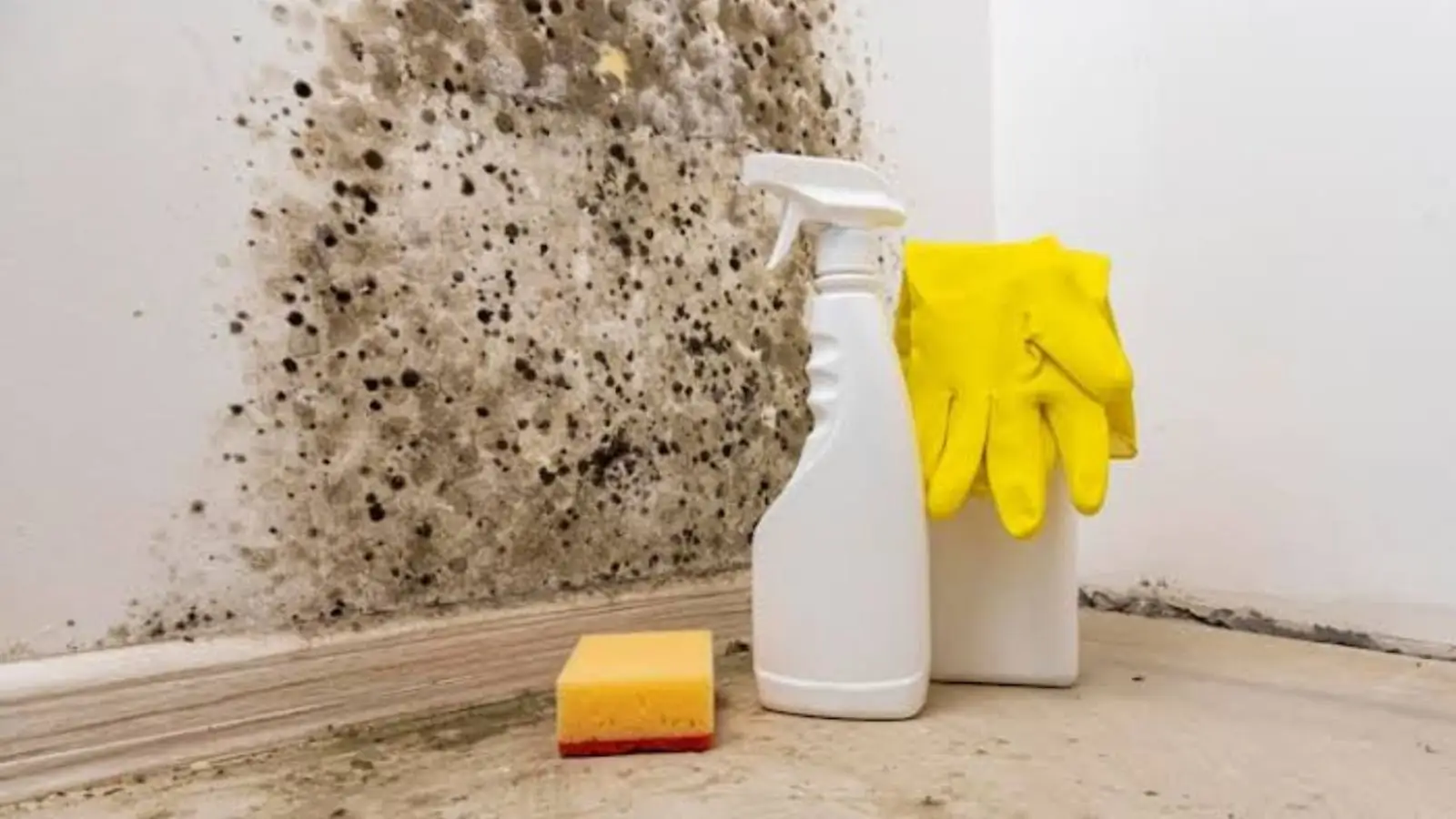
Black mold in a shower is nearly always a ventilation and cleaning problem, and it is nearly always fixable. Dark spots on grout, caulk and ceilings come from steam, soap film and surfaces that never fully dry. This guide shows how to clean it, when to replace caulk or drywall and how to keep it from coming back.
Why showers grow dark spots
A shower is wet and warm, then closed up. Soap scum, body oils and dead skin cells give growth something to feed on, and grout and caulk are porous enough to hold moisture. If the bathroom fan is weak or never used, steam settles on the ceiling and walls and stays there.
Dark patches often start in corners, along caulk lines, on the ceiling above the shower and around the bottom of the door or curtain. They look black, gray or green, and they come back unless the cause is addressed.
This guidance follows EPA advice on mold in the home, which says moisture control is the key and that small hard-surface areas can be cleaned with detergent and water. Larger areas fall under the process in ANSI/IICRC S520, the published standard for mold remediation.
| Where | Usual cause | Fix |
|---|---|---|
| Grout lines | Porous grout holding moisture | Scrub, seal after drying. |
| Caulk edges | Caulk aged or never dried | Remove and recaulk. |
| Ceiling above the shower | Steam and weak ventilation | Clean, prime, upgrade fan. |
| Shower curtain or liner | Soap film and dampness | Wash or replace. |
| Behind tile or on soft drywall | Leak behind the wall | Open and repair. |
| Under the door track | Pooled water | Clean and dry the track. |
How to clean black mold in a shower
- Run the exhaust fan and open a window while you work.
- Wear gloves, goggles and a mask rated for fine particles.
- Mist the area lightly, then scrub grout and tile with detergent and water and a stiff brush.
- Rinse with clean water and dry every surface with a towel.
- Remove stained caulk with a utility knife, clean the joint and let it dry fully before applying new caulk.
- Repeat on the ceiling, using a damp cloth and not a soaked sponge.
Do not mix cleaning products. Combining bleach and ammonia, or bleach and some acids, makes gas that is dangerous in a small room. Use one product at a time and rinse before trying another.
EPA guidance does not recommend routine biocide use for mold, and says physical removal and drying are what count. Detergent and water, plus drying, handle most shower growth on hard surfaces.
When it is more than surface growth
If grout crumbles, tile is loose, drywall near the shower is soft or the smell is strong, water may be reaching places you cannot see. Pressing on the wall below the shower valve or along the tub edge can reveal soft spots. A moisture meter finds wetness behind the tile.
In those cases the fix is to open the wall, dry the cavity, replace affected materials and repair the leak. That is the work covered by water damage repair and, if growth is widespread, mold remediation.
Soft wall by the shower?
Call and we explain how to check for a leak.
Fan, habits and finishing
- Run the exhaust fan during every shower and for 20 to 30 minutes afterwards.
- Check that the fan vents outdoors, not into the attic.
- Squeegee walls and doors after use.
- Leave the curtain open so it dries.
- Reseal grout once a year with a product suited to the tile.
- Replace caulk when it cracks, peels or stays stained after cleaning.
A fan that is noisy but weak does little. Hold a tissue to the grille. If it does not cling, the fan is moving too little air. Replacing it is a small job that fixes the cause for good.
Rentals and shared walls
In rentals and condominiums, a shower leaking into a neighbor or wall cavity is a shared matter. Report the stain and photographs in writing, and do not cut into the wall before the owner or association has seen it.
Choosing caulk and sealant
Use a caulk made for kitchens and baths, and apply it to a clean, fully dry joint. Tool the bead smooth and let it cure for the time on the label before the first shower. Caulk that is applied over damp growth traps it, so remove the old bead and clean the joint before starting.
Choosing and running a bathroom fan
Look at the rating for airflow printed on the fan and match it to the room size. A quiet fan gets used more, so noise matters. Run it during and after the shower, or use a timer or a humidity sensor switch so it runs without a reminder. The duct should lead outdoors and be short and straight.
Cleaning schedule that works
A quick wipe of the walls after showering, a weekly scrub of the corners and a monthly check of the caulk keep growth from starting. It takes a few minutes, and it replaces much larger cleanups later.
Ceilings above showers
Ceiling spots form where steam condenses. Clean with detergent, dry the surface and prime with a stain-blocking product before repainting. Use a paint made for bathrooms, and make sure the fan runs long enough to clear the room.
The Santa Barbara service page explains how the same work applies in the neighboring city, and the areas page lists the other towns near Goleta.
Safety checklist before you touch it
- Turn off power to any wet area before you work near outlets or fixtures.
- Wear gloves, goggles and a mask rated for fine particles.
- Do not sweep, brush dry or blow a fan across a large patch.
- Never mix cleaning products.
- Stop and call a crew if the area is large, inside a wall or follows flood or sewage water.
- Questions about symptoms or sensitivity belong with a physician.
Goleta local note: bathrooms in multi-unit buildings
The Census Bureau puts Goleta at 50.7 percent owner-occupied, so many bathrooms belong to a landlord or an association. Report recurring growth in writing and ask who maintains the fan and the caulk.
If a repair involves a wall, a fan duct or plumbing, ask the City of Goleta Building and Safety Division at (805) 961-7552 whether a permit applies.
Shower mold questions
Why does black mold keep returning in my shower?
The area is not drying fully. Weak ventilation, aged caulk or a hidden leak keeps it damp.
Is it safe to clean shower mold myself?
For small patches on hard surfaces, yes, with gloves, eye protection and a mask. Larger areas or soft walls call for a pro.
Should I replace the caulk or only clean it?
If it is cracked, peeling or stays stained after scrubbing, replace it. Let the joint dry first.
How do I know there is a leak behind the tile?
Soft drywall, loose tile, a persistent odor or readings on a moisture meter suggest it.
Questions about your own situation?
Call the 24/7 line and describe what you see. Call and we explain how to check for a leak.