
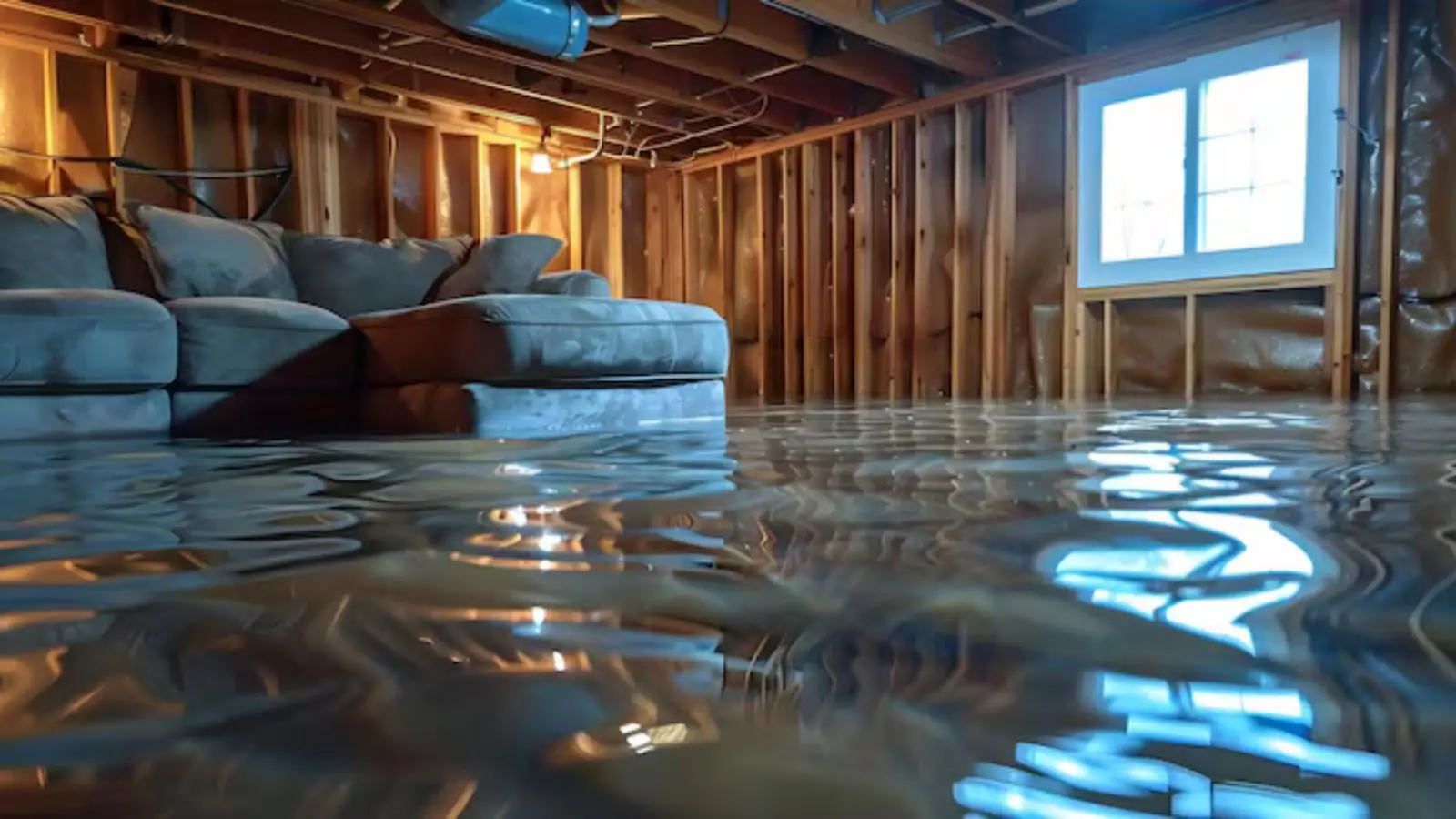
Basement water restoration begins with stopping the source, removing standing water and drying everything before it is rebuilt. Done in that order, many basements recover well. Done in the wrong order, the same basement grows mold behind new drywall. This guide covers what happens at each stage, who handles which part and how to judge whether a basement needs a full restoration or a lighter touch.
Where basement water comes from
Water enters a basement from above, from the sides, from below or through the plumbing. Heavy rain overwhelms a sump pump or a drain. Groundwater pushes through cracks and the joint where wall meets slab. A burst supply line or a failed water heater pours water in from inside. A sewer backup brings contaminated water up through floor drains.
The category of water changes the work. Clean water from a supply line can often be dried in place. Groundwater and rain runoff carry soil and bacteria and are treated as contaminated. Sewage is always treated as contaminated, and porous materials it touched are normally removed.
| Source | Typical category | Approach |
|---|---|---|
| Supply line or water heater | Clean | Extract, dry, repair. |
| Rain runoff or groundwater | Contaminated | Extract, remove porous materials, clean, dry. |
| Sewer backup | Contaminated | Remove affected materials, clean and disinfect. |
| Appliance overflow | Clean to contaminated | Depends on the source. |
| Condensation or high humidity | Not standing water | Control moisture, check for mold. |
Step one: stop the source and make the space safe
Turn off the water if a pipe or heater is the cause. Turn off power to the basement at the panel if water is near outlets, a furnace or a water heater, and do not walk through standing water while power is on. If you cannot reach the panel safely, call the utility or an electrician.
Standing water can hide steps, tools and floor drains, and it can weigh a great deal. A pump or truck-mounted extractor removes it far faster than buckets. Our emergency water removal service describes how extraction works and what to expect.
Step two: remove water and wet materials
After extraction, the crew removes materials that cannot be dried. Wet carpet and pad usually go, along with insulation, baseboards and the bottom of drywall. Concrete, framing and some hard surfaces can be dried and cleaned. The goal is to open the space enough that air can reach every wet surface.
Contaminated water changes the list. Porous items such as drywall, insulation and carpet exposed to sewage or floodwater are removed, bagged and taken away. Furniture and belongings are sorted, and anything that can be cleaned is cleaned.
Basement flooded?
Call now and we explain what to shut off and what to leave.
Step three: dry the structure
Drying takes days, and the work is measured. Air movers push air across wet surfaces, dehumidifiers pull moisture out of the air and meters track the readings in walls and slab. Concrete holds water for a long time, so readings are repeated until they match a dry reference.
Closing up too early is the most common error in basement work. Moisture trapped behind new drywall stays there and feeds mold. A drying log with dated readings is the best evidence that a basement is ready. Our water mitigation page explains how a drying plan is built and checked.
Step four: clean, sanitize and check for mold
Once the space is dry, surfaces are cleaned and, where the water was contaminated, treated with products suited to the job. Hard surfaces are wiped, and the air is exchanged. If you see mold growth or smell mustiness, the work may shift to mold remediation, which has its own containment and removal steps.
Step five: rebuild
Rebuilding means insulation, drywall, flooring, trim and paint, and in a basement it should include moisture-resistant materials where practical. A raised floor system or a vapor barrier can help a basement stay dry afterwards, and the choice depends on the cause of the water. A restoration crew can usually rebuild, or coordinate with your contractor.
Prevent the next flood
- Test the sump pump and its backup power, and clear the discharge line.
- Keep gutters clean and downspouts directed away from the foundation.
- Grade the soil so water runs away from the walls.
- Replace aging supply hoses and water heater connections.
- Consider a backwater valve on the sewer line if backups have happened before.
- Store valuables on shelves, not on the floor.
Insurance and documentation
Photograph everything before it is moved, keep a list of discarded items and save every receipt. The California Department of Insurance says standard homeowners policies do not cover flood damage, and many policies treat sewer backup as an optional endorsement. Read your policy before work begins and ask your insurer what it covers.
What to ask a restoration company about a basement
- How will you check the slab and walls for moisture?
- Will you remove carpet, pad and drywall, and where do you cut?
- What is the plan if the water came from outside and may return?
- How will you document readings for my insurer?
- Who will come back to check the equipment?
Basement jobs depend on the source, so the answers vary. A crew that asks where the water came from and how it got in is already thinking about the right plan.
How long a basement takes to recover
Extraction can be finished in a day. Drying usually takes several days because concrete and framing release water slowly, and rebuilding follows after readings are normal. Weather, the depth of the water and the number of rooms all change the timeline. A good crew gives a range, explains what could change it and updates you as readings come in.
If your basement is in Santa Barbara or a neighboring town, read how we handle it on the Santa Barbara page, or see our service areas for other nearby cities.
Goleta local note: drainage and sump equipment
Basements are less common in this part of the coast than crawl spaces and lower-level garages, but some Goleta homes have a lower level or a sunken room that behaves the same way. If yours does, a sump pump with a battery backup is worth checking before the wet season.
The City of Goleta Building and Safety Division can tell you whether a drainage or sump change needs a permit. Call (805) 961-7552, since rules vary by project.
Basement water restoration questions
How long does basement water restoration take?
Extraction is usually the same day. Drying takes several days and is complete when moisture readings match a dry reference.
Can I do the drying myself?
Small clean-water spills can be dried with fans and a dehumidifier. Larger or contaminated floods need extraction equipment, protective gear and moisture meters.
Will my insurance cover a flooded basement?
It depends on the source and the policy. Flood and sewer backup are often excluded unless you added coverage, so ask your insurer.
When should mold be a concern?
If materials stay wet beyond a day or two, or you see growth or smell mustiness, have the area checked before closing walls.
Questions about your own situation?
Call the 24/7 line and describe what you see. Call now and we explain what to shut off and what to leave.