
Basement water damage cleanup is a sequence of decisions about what to throw out, what to clean and what to dry in place. Getting those decisions right in the first two days limits the cost and the mold risk. This guide gives a practical order of work for the owner who needs to act before a crew arrives, and explains where a professional is worth the call.
Safety before cleanup
Do not enter a flooded basement while electricity is on. Water conducts electricity, and a flooded panel, outlet or appliance can be live. If you cannot turn the power off from upstairs, call the utility or an electrician.
Wear waterproof boots, gloves and eye protection, and use a mask when handling wet debris. Avoid gas appliances and generators in or near the space, since exhaust is dangerous in enclosed areas. If the water came from a sewer or a drain, treat everything it touched as contaminated.
Sort what you have
| Item | After clean water | After contaminated water |
|---|---|---|
| Carpet and pad | Often discard, sometimes dry if caught early | Discard. |
| Drywall and insulation | Dry or cut out depending on readings | Discard affected sections. |
| Upholstered furniture | Dry quickly or discard | Discard. |
| Solid wood furniture | Dry and clean | Clean carefully or discard. |
| Cardboard boxes and paper | Discard if soaked | Discard. |
| Plastic, glass and metal | Clean and dry | Clean and disinfect. |
Photograph items before they are moved or thrown out, and keep a list with approximate values. Keep a few samples of flooring or paneling if an insurer needs them. Do not delay removal of items that are rotting or smelling, since they speed up mold growth.
Remove water in the right order
- Stop the water source if it is still running.
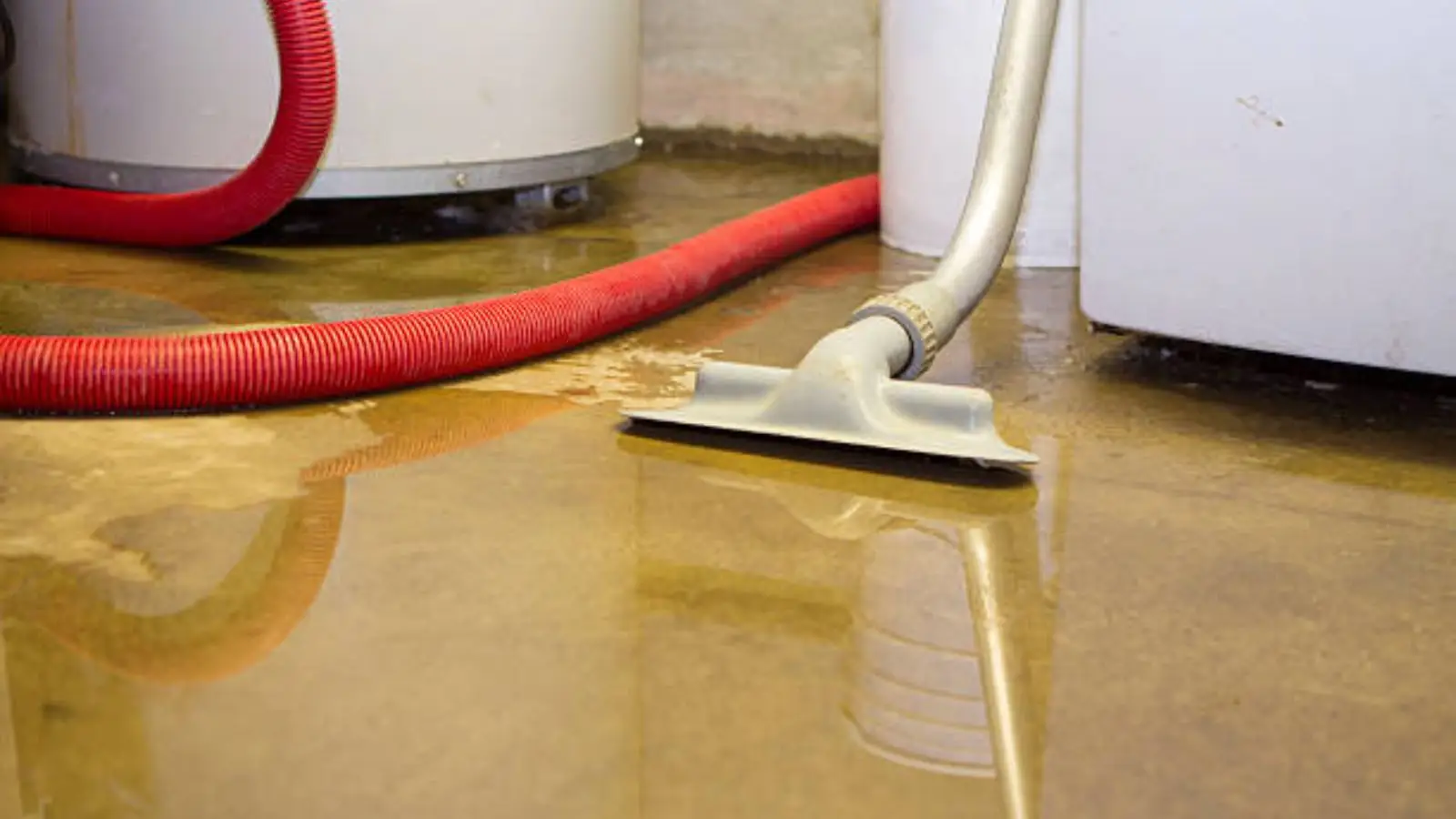
- Remove standing water with a pump or wet vacuum, working from the top down.
- Remove wet carpet, pad and other porous materials from the floor.
- Open the space to airflow and run dehumidifiers.
- Pull baseboards and cut drywall at the wet line if readings are high.
- Clean surfaces after the heavy water is gone.
If the basement is deep, pump it down in stages. Removing all the water at once can put pressure on the walls and floor, because groundwater outside may still be high. That is one reason a trained crew is useful for heavy flooding. Details on how we remove standing water are on the emergency water removal page.
Cleanup too big to handle?
Call and describe the water. We explain what a crew would do.
Cleaning surfaces
Concrete floors and walls can be washed with a detergent suited to the job, rinsed and dried. For contaminated water, the cleaning step is more thorough and the products are chosen to match the contamination. Wipe hard surfaces, shelving and washer or dryer exteriors, then ventilate until the air smells neutral.
Do not mix cleaning chemicals. Combining some household products releases gases that are dangerous in enclosed spaces. If you are unsure which product is safe, ask the manufacturer or the crew.
Drying and checking readings
Fans alone do not dry a basement well, because humid air just moves around. A dehumidifier with a drain line pulls moisture out of the air, and air movers push air across the surfaces. Concrete can stay wet for days. Moisture meters show whether walls and slabs are ready for rebuilding.
Our water damage cleanup service covers removal, cleaning and drying in one plan, and the crew documents readings so you know when the job is finished.
Signs that mold is starting
Look for fuzzy or spotted growth on drywall, wood or stored items, and notice any musty smell. Mold appears where moisture stays for more than a day or two. If you find growth, avoid disturbing it. Spreading spores through dry sweeping or fans makes the problem larger.
Small areas of surface growth on hard materials can sometimes be cleaned by the owner following EPA guidance. Larger areas, or growth in walls, need a mold-trained crew. The mold remediation page explains containment and removal.
What to do about the smell
A basement odor after water damage usually comes from damp materials left behind. Air fresheners hide it and do not fix it. The smell fades when the material causing it has been removed or dried, so follow it to the source.
If a smell persists after drying, check for hidden wet insulation, a damp bottom plate or water behind a finished wall. A moisture meter and a thermal camera find these faster than guesswork.
Protecting what is left
Move undamaged items to a dry room, and lay plastic or foil under furniture legs so stains do not transfer. Photographs, papers and books can be air dried flat or kept in a freezer bag until a specialist can look at them. Do not use a hair dryer or an oven on documents.
Cleaning appliances and fixtures
A washer, dryer, furnace or water heater that sat in water should not be switched on until a technician has checked it. Water inside controls, motors and gas valves can cause a failure later, even if the unit seems fine. Wipe exteriors, leave doors open to dry and call for service.
Disposal and hauling
Wet carpet, drywall and insulation are heavy. Cut carpet into strips before moving it, bag small debris and keep contaminated material separate from clean items. Ask your hauler or the city about rules for construction debris before you fill a container.
For homes in nearby Santa Barbara, see our Santa Barbara page, and the areas we serve page lists other communities close to Goleta.
Goleta local note: renters, owners and documentation
The Census Bureau puts Goleta at 50.7 percent owner-occupied, so a large share of lower-level spaces belong to a landlord or an association. If you rent, report the flooding in writing the same day, keep receipts and avoid throwing out damaged building materials until the landlord has seen them.
For disposal questions, ask your waste hauler or the City of Goleta about bulky items and construction debris before you fill a dumpster.
Basement cleanup questions
What should I throw out first after a basement flood?
Carpet pad, soaked cardboard, upholstered items and anything with a bad smell. Photograph them first and keep a list for your insurer.
Can a wet vacuum clean up a flooded basement?
For a small amount of clean water, yes. For deep or contaminated water you need pumps and protective gear.
How soon should drying begin?
As soon as the standing water is gone. EPA guidance says to dry wet materials within 24 to 48 hours to limit mold growth.
Is it safe to store items in a basement after cleanup?
Only after readings show dry materials. Use shelves and plastic bins and keep items off the floor.
Questions about your own situation?
Call the 24/7 line and describe what you see. Call and describe the water. We explain what a crew would do.